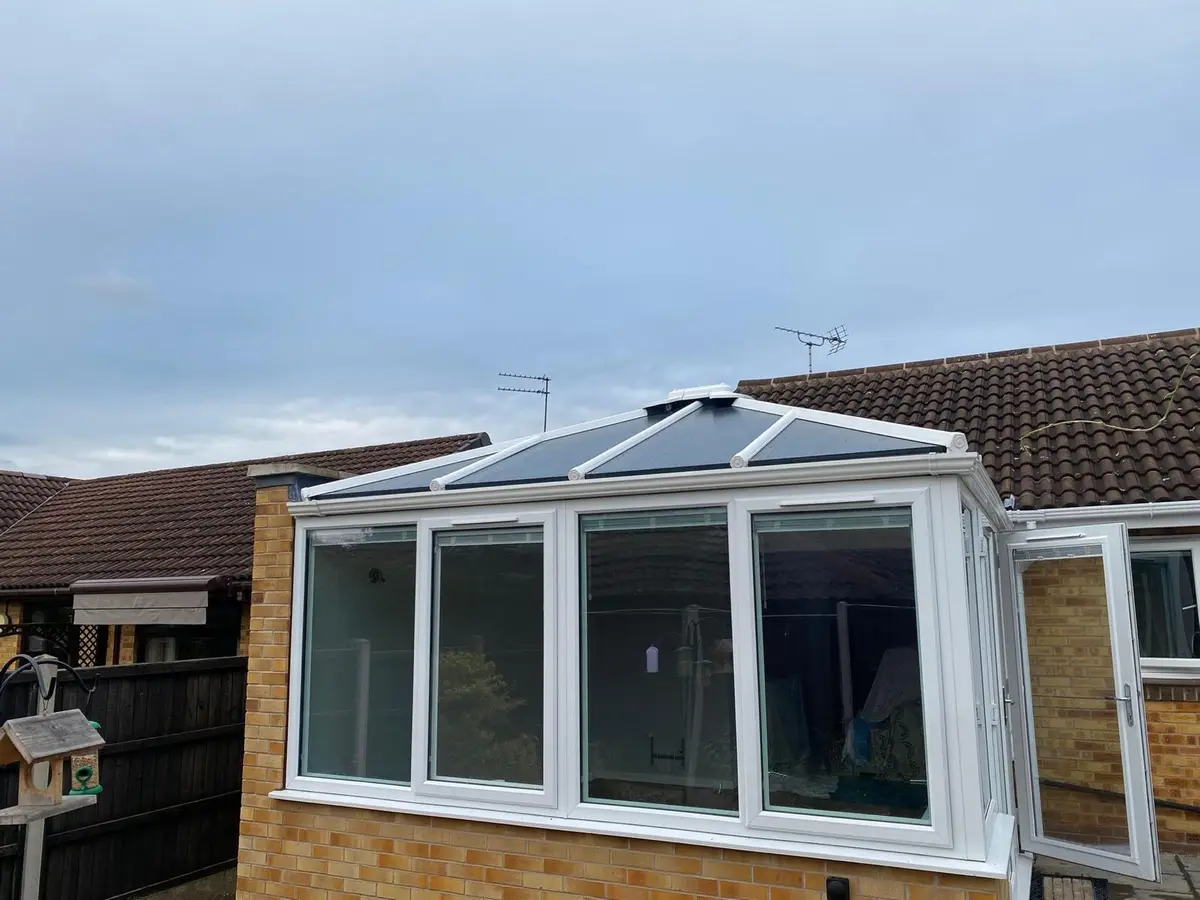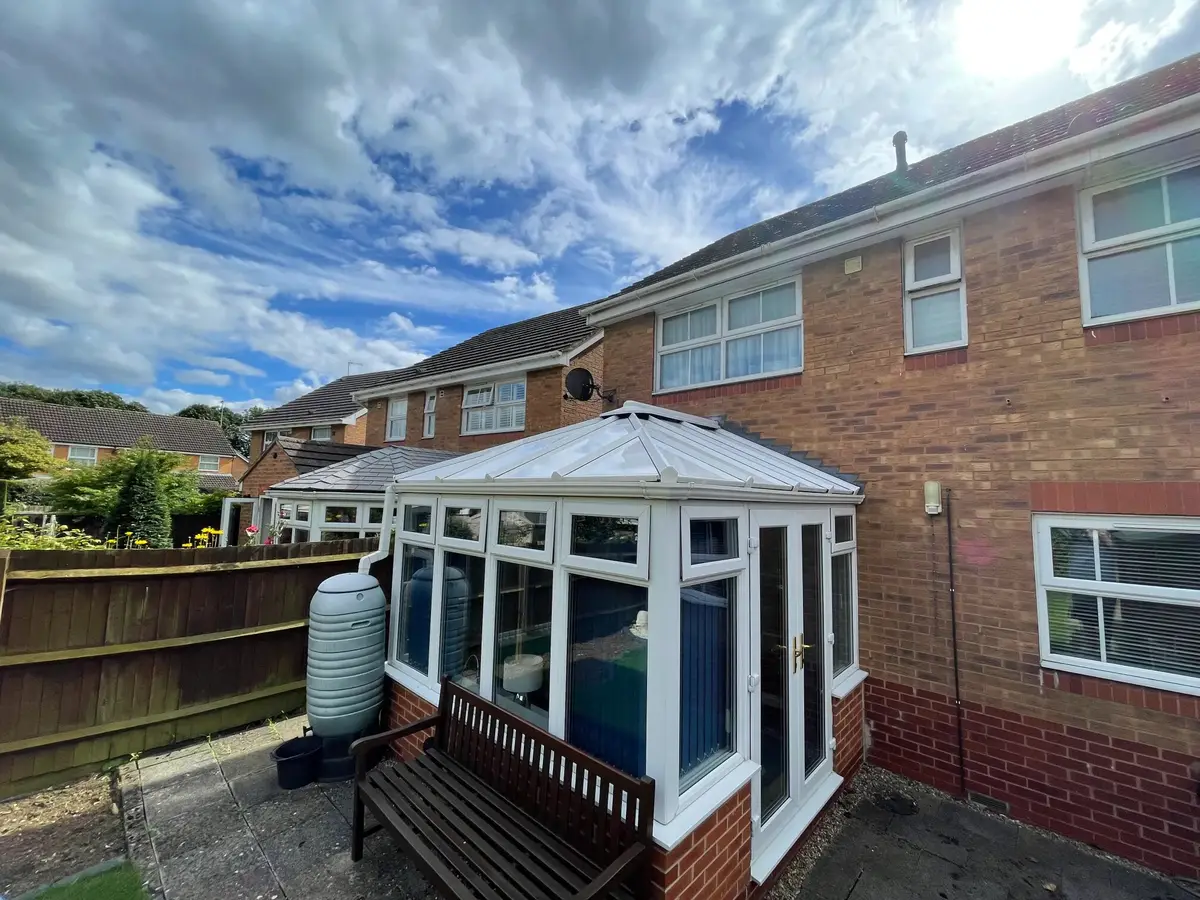
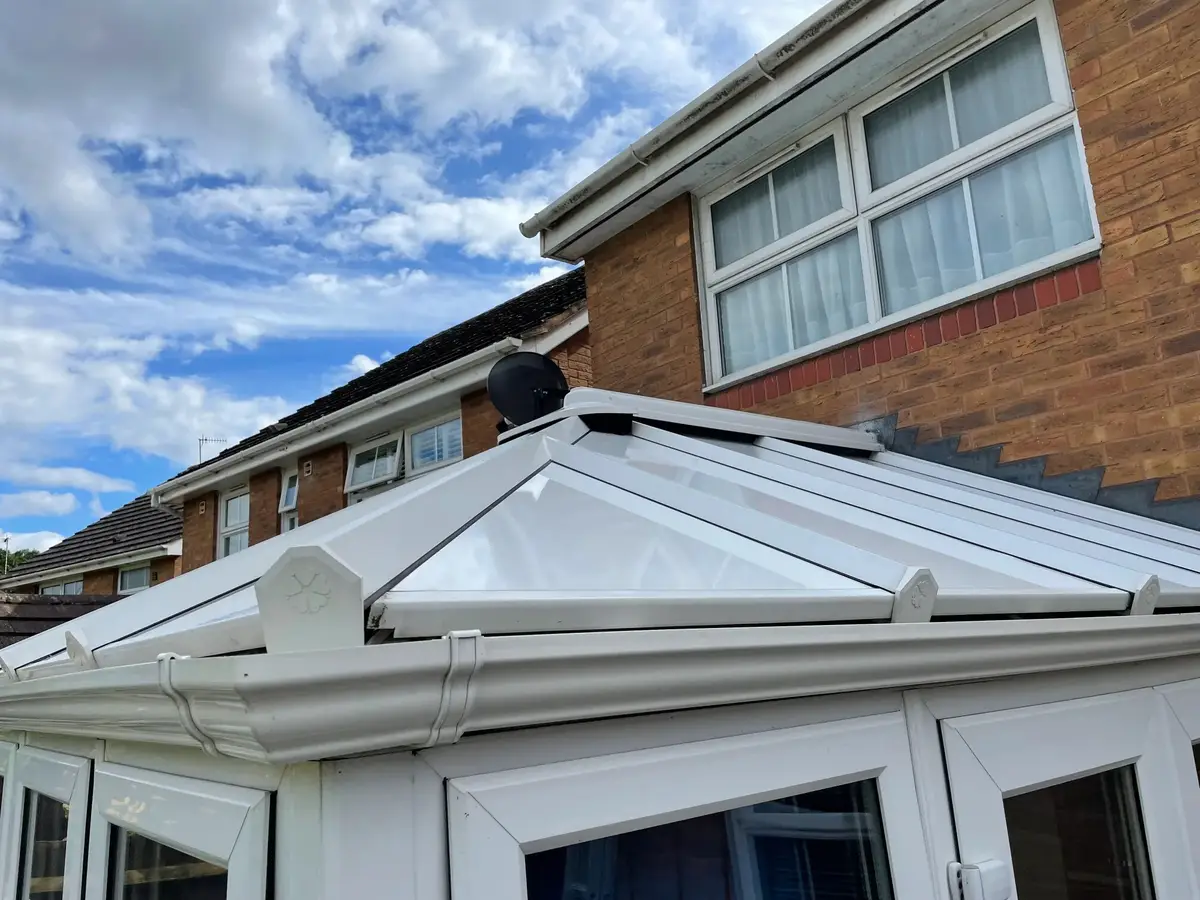
Through a full winter on electric heat, 12 m² of 16 mm polycarbonate overhead lets out about £375 of warmth at the 26.32p per kWh cap rate. Swap it for our 75 mm insulated panels and the figure falls to about £70. If you heat with gas at 7.97p and a 90% efficient boiler, it is about £126 against £24.
The short answer from Eco Tech
Most of our customers are not chasing a smaller bill. They want a room that is warm enough to use from October to March. The numbers below show both sides: what the roof costs you in lost heat, and why a heater never quite wins against a cold roof.
Which parts of the room lose heat
Warmth escapes through the roof, the glazed sides, the floor and draughts around doors and vents. The roof is normally the biggest single surface and it faces the open sky, which usually makes it the largest single loss. It is also the easiest part to change.
Everything on this page is for the roof alone, because that is what a replacement alters. We spell this out so nobody reads the figures as the cost of heating the whole room. Whatever roof you have, the walls and floor come on top of each number.
How we did the maths
Watts lost equals U-value multiplied by area multiplied by the temperature difference. For 12 m² of 16 mm polycarbonate, U about 2.3, at 20°C inside and 0°C outside, that is 2.3 x 12 x 20, or 552 W. Our 75 mm panels have a U-value of roughly 0.43, so the same roof loses 103 W.
To scale up to a year we use heating degree days, a measure of how cold it gets and for how long. England averages around 2,150 degree days on a 15.5°C base. Annual kWh is U-value x area x 2,150 x 24, all divided by 1,000.
For prices we use the Ofgem cap in force from 1 October until 31 December 2026: 26.32p for a kWh of electricity and 7.97p for a kWh of gas. Gas assumes a boiler running at 90% efficiency, so a useful kWh of heat costs 7.97 / 0.9, close to 8.86p. Fan, oil filled and panel heaters are all equally efficient, so a kWh of warmth costs the same from each.
Example one: a single winter evening
Picture 0°C outdoors and the conservatory kept at 20°C from the end of the working day for four hours. The figures below are only the heat leaving through the roof.
| Roof over the room | Watts escaping | Electricity, each hour | Gas, each hour | Electricity, whole evening | Gas, whole evening |
|---|---|---|---|---|---|
| Polycarbonate 16 mm (U 2.3) | 552 W | 14.5p | 4.9p | 58p | 20p |
| Eco Tech panels 75 mm (U 0.43) | 103 W | 2.7p | 0.9p | 11p | 4p |
Pennies an hour may not sound like much. The real issue is that a heater battling 552 W pouring out overhead never quite gets the room comfortable, whereas topping up 103 W is easy. That is where the comfort difference comes from.
Example two: a whole heating season
Here we assume the conservatory is kept as warm as the rest of the house from autumn through to spring. Again, roof only.
| Roof over the room | U-value | Yearly heat loss | Cost on electricity (26.32p) | Cost on gas (7.97p, 90% boiler) |
|---|---|---|---|---|
| Double glazed glass from before 2002 | 2.8 | 1,734 kWh | £456 | £154 |
| Polycarbonate 16 mm | 2.3 | 1,424 kWh | £375 | £126 |
| Polycarbonate 25 mm | 1.6 | 991 kWh | £261 | £88 |
| Polycarbonate 35 mm | 1.4 | 867 kWh | £228 | £77 |
| Current low-e glass (middle of range) | 1.1 | 681 kWh | £179 | £60 |
| Eco Tech panels 75 mm | 0.43 | 266 kWh | £70 | £24 |
Replacing 16 mm polycarbonate with panels holds around 1,158 kWh a year inside the room. On electric heating that is worth about £305 a year, and on gas about £102. Starting from 25 mm polycarbonate, the yearly saving is roughly £191 with electric heat or £64 with gas.
Example three: a typical plug-in heater
A lot of households rely on one plug-in heater rated at 2 kW. On full power it uses 2 x 26.32p, so around 53p an hour. Run it four hours a night for about 180 nights over six months and it uses 1,440 kWh, close to £379.
That lands very near the polycarbonate (16 mm) row in example two, and the match is no accident. Under a poorly insulated roof, a large share of what the heater produces goes straight out through the top. Under an insulated roof, the same heater gets the room up to temperature sooner and can then run lower or for less time.
A heater with a thermostat and timer, or a plug-in thermostat for the one you already own, is the cheapest upgrade there is. It stops the heater running at full power after the room is warm, whatever is overhead.
Running a radiator off the boiler
Gas costs less per unit of warmth, with one catch. To remain outside building regulations, a conservatory has to be closed off from the house with doors fit for an outside wall, and must have no fixed heating fed from the house. Plumb a radiator into an exempt conservatory and the exemption ends.
Fitting a solid insulated roof ends it too, and the room is then treated more like an extension. From that point extending the central heating becomes possible, but check which regulations apply first. Our conservatory roof building regulations guide sets out the rules.
Will the roof pay for itself?
We would rather give you the honest figures. Our smallest roofs start at £3,000 including fitting. If you heat the room on electricity all season and save around £305 a year, the energy saving alone takes about 10 years to cover the cost. On gas, saving about £102 a year, it is closer to 29 years.
If you hardly heat the room today, there is little to save, because you are spending very little. What you gain then is more months of the year in the room, not a smaller bill. Nearly everyone who changes their roof does it for comfort: fewer cold months, no more 35 to 40°C summer afternoons, quieter showers and fewer drips of condensation. You can spread the cost with finance through Kanda, subject to status.
For a fuller weighing up, read is an insulated conservatory roof worth it.
Cheaper steps to try first
- Shut the doors through to the house when nobody is in the conservatory, so the central heating does not drift into it.
- Set any heater to 18 to 20°C on a thermostat and timer rather than leaving it on full.
- Stop the draughts around doors and vents, particularly on old sliding doors.
- Lay a thick rug on a stone or ceramic floor to take the chill off underfoot.
- Look at internal insulation when the budget will not stretch to a new roof. Fitted, it costs roughly £1,000 to £3,200, though the old roof remains above it. Our insulating a conservatory roof page weighs it against panels.
Next steps
Price a panel roof for your size and style on our roof price calculator. Read how our UK made insulated roof panels are built, then ask Eco Tech for a free survey and a fixed price in writing.
Questions people ask
What does a conservatory heater cost to run?
On full power a 2 kW electric heater costs about 53p an hour, with electricity at 26.32p a unit. A thermostat cycles it once the room reaches temperature, so the real cost is normally lower.
Gas or electricity: which heats a conservatory more cheaply?
Gas, at roughly 8.86p per useful kWh through a 90% boiler compared with 26.32p for electricity. The catch is that a radiator off the house system breaks the building regulations exemption of an exempt conservatory.
How much heating money do insulated roof panels save?
For a 12 m² roof heated all season, changing 16 mm polycarbonate for 75 mm panels keeps about 1,158 kWh a year in the room, worth around £305 with electric heating or £102 with gas.
Why does my conservatory stay cold with the heater running?
On a 0°C night, 12 m² of 16 mm polycarbonate lets about 552 W escape, so a lot of the heat goes straight out. An insulated roof brings that down to about 103 W.