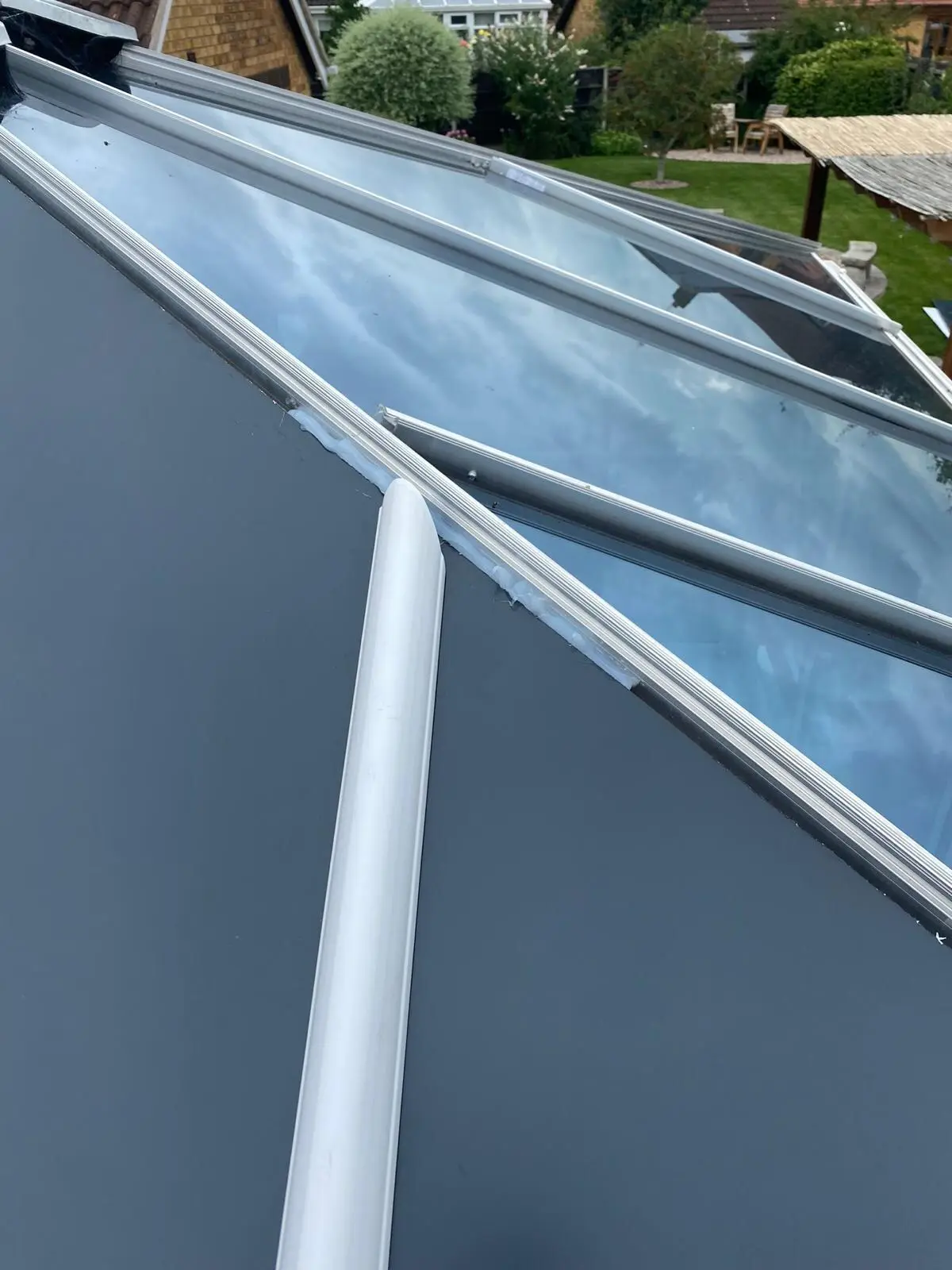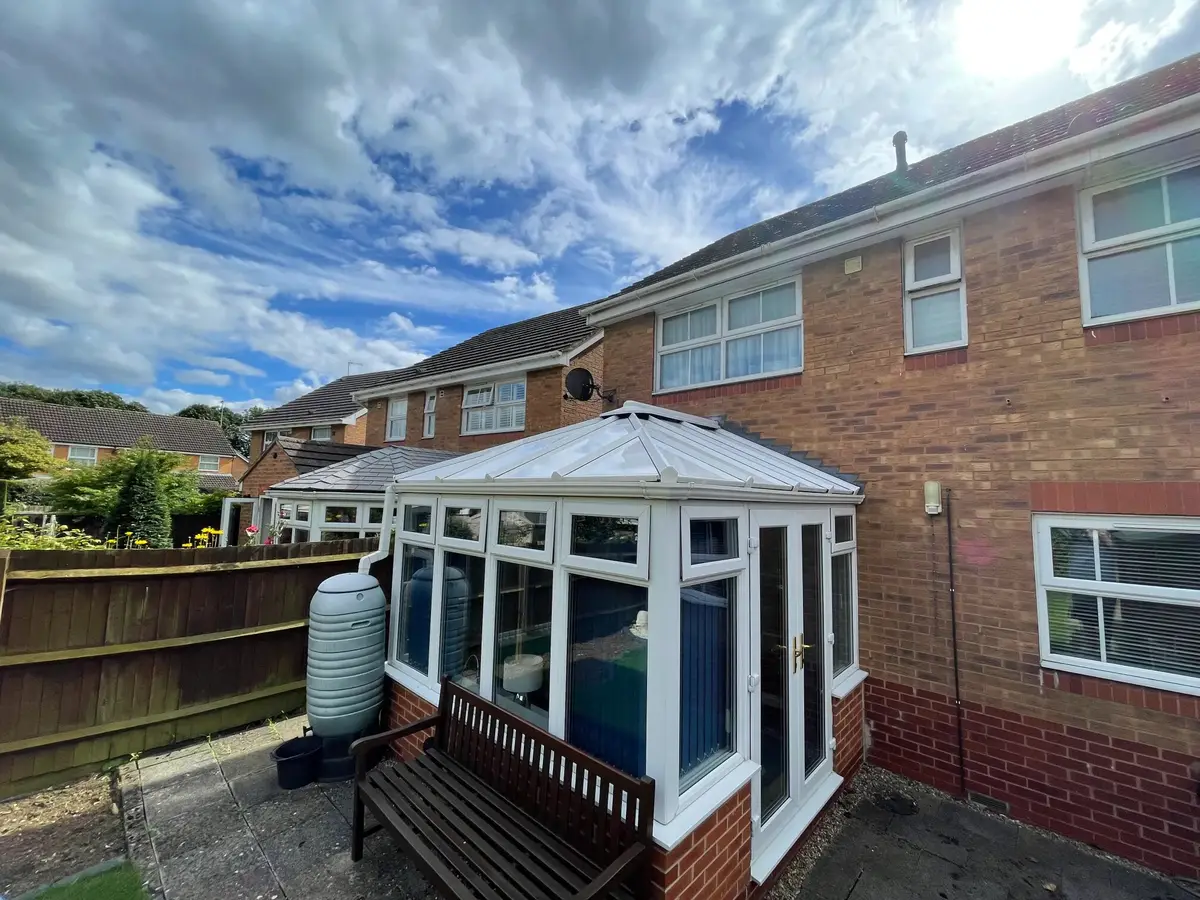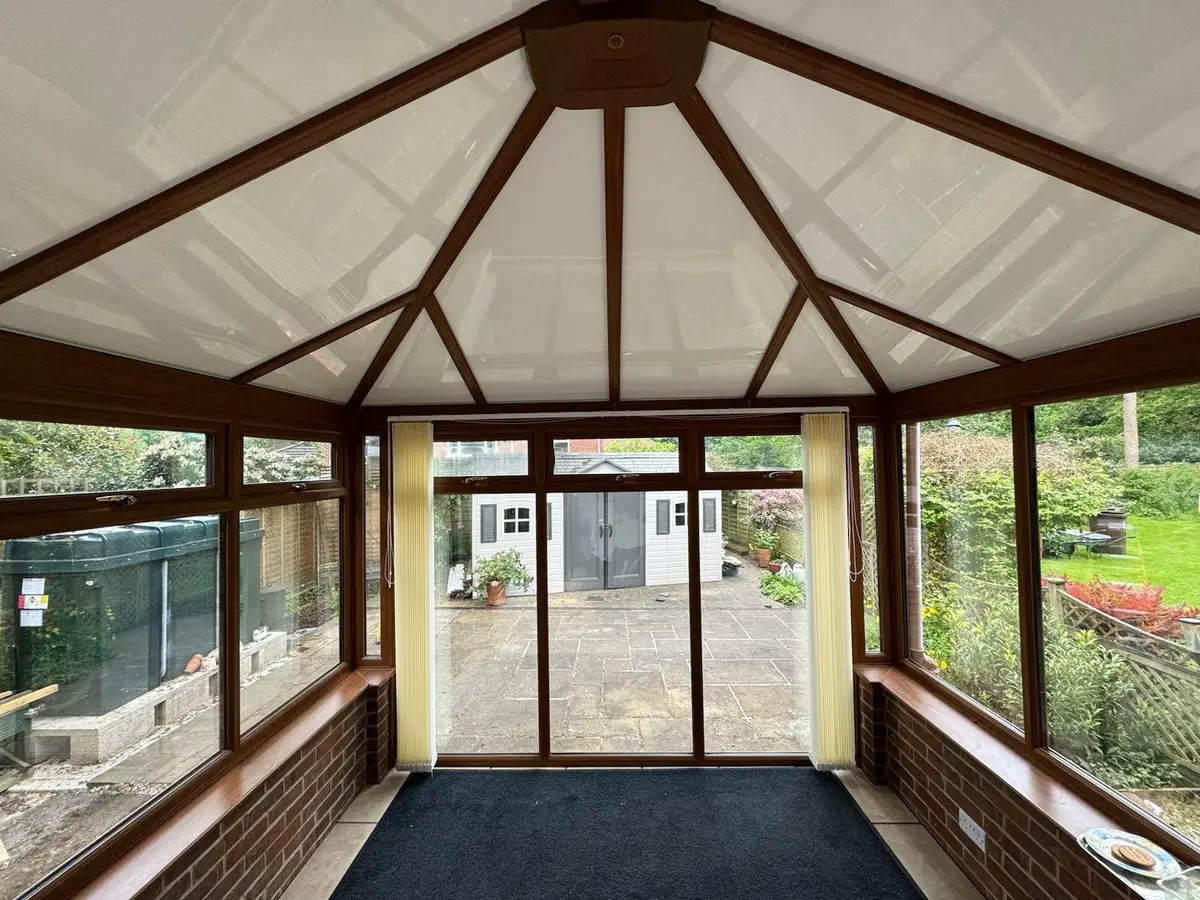
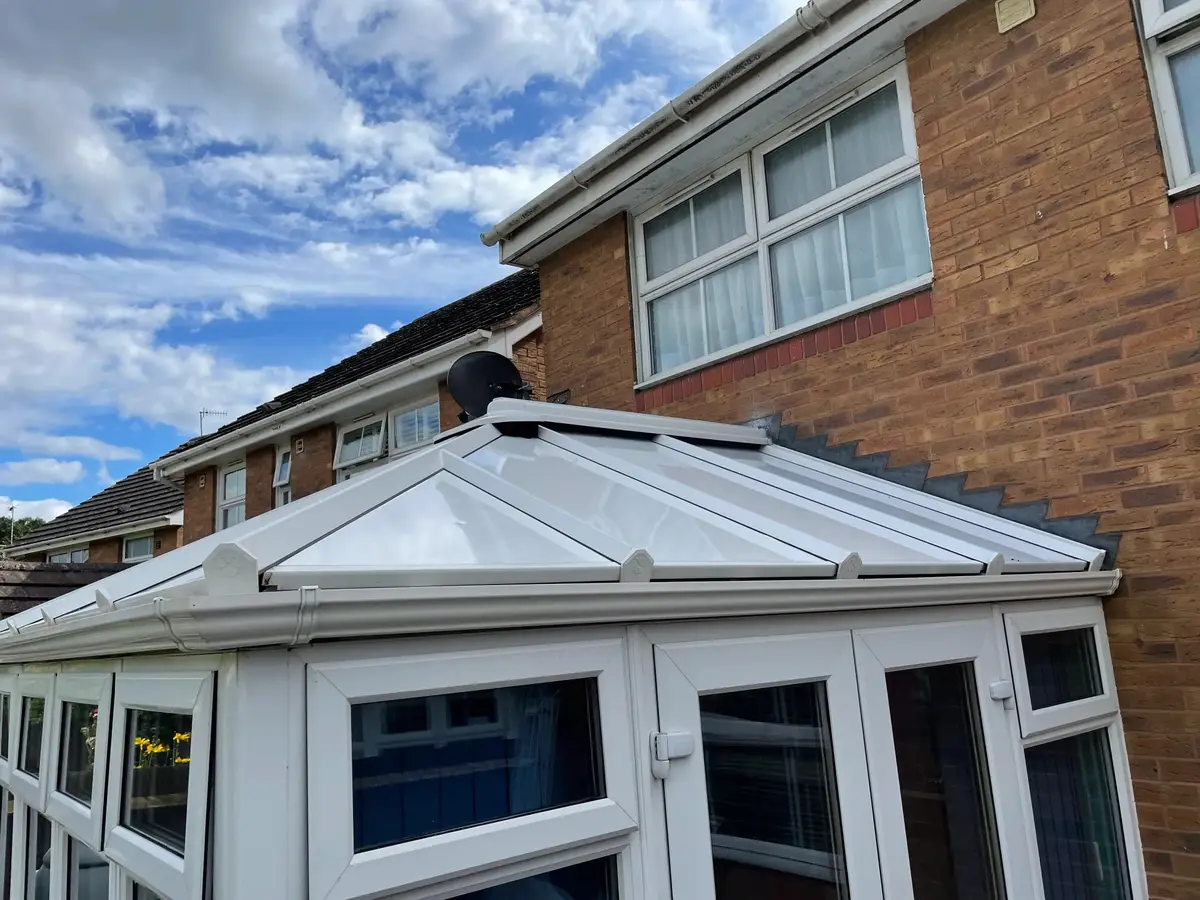
With Eco Tech, insulated roof panels normally cost half or less of what a lightweight tiled conservatory roof costs. On a medium Edwardian with roughly 17 m² of roof, panels come to around £4,200 to £4,950 fitted against £10,050 to £14,750 for tiles, leaving most owners £5,000 to £10,000 better off. Panels take 1 to 2 days rather than 3 to 5, on your existing frame.
Find your own saving
Set the slider to your conservatory's floor size and choose the shape. Each figure is a fitted price that includes stripping out the existing roof and guarantee cover. The middle number shows the money you hold on to by going with panels.
The tiled roof figures here come from fitted prices advertised across the UK market during 2026: a lean-to measuring 3 m by 3 m at roughly £6,000 to £9,000, a roof measuring 4 m by 4 m at £9,500 to £15,000, and big P-shapes from £12,000 to £20,000 or above. The panel figures are Eco Tech's own prices.
How the gap changes with size
This is not a matter of a couple of hundred pounds. The gap widens as the roof gets bigger, because tiling is priced much like putting up a small extension, whereas panels are priced like changing the sheets in a frame you already have.
| Size | Eco Tech panels | Lightweight tiled roof | Saved with panels |
|---|---|---|---|
| Small, 0 to 12 m² | £3,200 to £3,800 | £6,350 to £9,550 | £2,550 to £6,350 |
| Medium, 12 to 25 m² | £4,200 to £4,950 | £10,050 to £14,750 | £5,100 to £10,550 |
| Large, 25 m² and over | £5,800 to £6,850 | £15,900 to £22,900 | £9,050 to £17,100 |
Every shape follows the same pattern. Victorian, gable end and P-shaped conservatories cost more than lean-tos on either route, as there are extra hips, valleys and trims to finish. In proportion, though, the gap barely moves: tiles cost two to three times what panels do.
| Size | Eco Tech panels | Lightweight tiled roof | Saved with panels |
|---|---|---|---|
| Small, 0 to 12 m² | £3,300 to £3,900 | £6,600 to £9,900 | £2,700 to £6,600 |
| Medium, 12 to 25 m² | £4,350 to £5,150 | £10,450 to £15,300 | £5,300 to £10,950 |
| Large, 25 m² and over | £6,000 to £7,100 | £16,500 to £23,750 | £9,400 to £17,750 |
Where the extra cost of tiles comes from
The tiles are not the expensive part. The cost lies in everything that has to be built around them. Fitting a tiled roof means putting a brand new roof structure on top of the conservatory and then finishing the inside the way you would a room in the house. Our panels reuse the structure that is already there.
1. A new roof structure from scratch
With tiles, the existing roof comes off entirely, roof bars included. A new frame replaces it, made in aluminium or GRP as a rule. On top of the window heads sits a ring beam, then come rafters and battens, a membrane that breathes, boards of insulation, and last of all the tiles. That adds up to plenty of materials and many hours before any tile is laid.
Our panels drop into the roof bars that currently hold your polycarbonate or glass. Out come the old sheets, in go panels made to your sizes, and fresh caps and seals hold them in place. The frame, the bars and any gutters in good order are kept.
2. A plastered ceiling
A tiled roof needs a ceiling under it, which is boarded, skimmed and left to dry before painting. So a plasterer comes in, there is wet work inside your home, and the room is out of action while it dries. A panel's inner skin is a ready finished white ceiling, smooth enough to wipe down, and spotlights can go in the same day.
3. Time on site
Expect three to five days for most tiled roofs, and longer on large P-shapes or in poor weather. Each extra day brings more labour, scaffold hire and site costs, and all of them land on the bill. A small lean-to or Edwardian in panels is normally done in a single day and most others in two. More than anything else, that is why the prices sit so far apart.
4. Scaffold, skip and waste
Tiling normally means scaffold around the conservatory and a skip on the drive for the old roof and offcuts. Most single storey panel roofs need neither. A pair of our fitters work off a platform, and every old sheet goes back on the van to be recycled.
5. Load checks and strengthening
Tiles weigh more than the polycarbonate or glass they take over from, so the windows and frame, and in some cases the dwarf walls and footings too, must be checked for the extra load. Where the frame is not up to it, it must be strengthened or replaced, and that alone often adds £3,000 to £4,000. Panels are light enough for most uPVC and aluminium frames, so they go directly into your current bars.
What the extra spend buys you
To be fair, tiles do win on a couple of points. The real question is whether those points are worth another £5,000 to £10,000 to your household.
| Eco Tech insulated panels | Lightweight tiled roof | |
|---|---|---|
| Usual cost for a medium roof | £4,200 to £4,950 | £10,050 to £14,750 |
| Days on site | 1 to 2 | 3 to 5 |
| Your current frame and bars | Reused | New roof frame, with the window frame often reinforced |
| Ceiling finish | White and finished when we leave | Skimmed, left to dry, then painted |
| Need for scaffold and a skip | Seldom | Normally |
| U-value (smaller number means warmer) | Around 0.43 W/m²K from a 75 mm core | Around 0.15 W/m²K |
| Appearance from outside | Smooth panels, any RAL colour | Like the roof of a house |
| Roof lights and spotlights available | Yes | Yes |
| Warranty | 10 years, insurance backed through HomePro | Depends on the installer |
Tiles have two genuine advantages: the look, since from the garden the roof matches the house, and a better U-value. Some people care about both. Neither comes free, so it helps to put a figure on each.
What the extra insulation is really worth
Tiles keep in more heat than a 75 mm panel, and we are not going to argue otherwise. The useful question is what that gap is worth in a year, because lower heating bills are the only way the extra outlay ever comes back to you.
Picture a medium conservatory with roughly 19 m² of roof. Yearly heat lost through a roof is U-value times area times the year's heating degree days times 24 hours, and England averages about 2,150 degree days.
- Polycarbonate, 16 mm (2.3 W/m²K): about 2,260 kWh lost through the roof each year.
- Insulated panels (0.43 W/m²K): about 420 kWh.
- Tiled roof (0.15 W/m²K): about 150 kWh.
Moving from polycarbonate to panels saves around 1,840 kWh a year. Moving on from panels to tiles saves roughly 270 kWh more. The first step is the one that turns the room into somewhere you want to sit, and panels capture nearly all of it: about 87 percent of what tiles would save, for under half the money.
At the October to December 2026 Ofgem cap, those 270 extra kWh come to about £72 a year if an electric heater warms the room (26.32p per kWh), or around £24 a year with gas central heating at 7.97p through a boiler running at 90 percent efficiency. Set against an extra £5,000 to £10,000, tiles need over 70 years to earn back the difference on electric heat, and well beyond 200 years on gas. The slider at the top runs these sums for your size.
When tiles might be the right call
There are cases where they are, and we would rather be clear about them.
- Appearance matters more than budget. If you want the conservatory to read as a brick extension with a proper roof when seen from the garden, tiles give you that and panels will not. Panels look like a neat, modern solid roof in the colour you pick.
- The frame is worn out. If the windows, frame or dwarf walls need rebuilding regardless, the structural cost is already in your budget and the gap shrinks. We check this at every survey and give you a straight answer.
- You want the lowest possible U-value. Where the room is kept at house temperature all day, every day, the extra insulation is worth slightly more to you. The payback is still long.
For most homes, where a sound uPVC frame sits under a cold, noisy polycarbonate roof or tired glass, panels give nearly all the comfort for a small share of the cost.
Putting the saving to use
An extra £5,000 to £10,000 in hand is real money. For many households it would pay for new flooring and furniture in the conservatory, a set of bifold doors to the garden, or a few winters of heating. Plenty of our customers spend some of it on two roof lights at £395 each plus LED spotlights at £345, and still finish thousands under the tiled price.
Living through the work
Tiling is a building job, with scaffold, a skip outside, days of noise and a ceiling drying in a room you cannot use. With Eco Tech panels the room is sheeted over, the old roof is off by mid morning, the new one keeps the rain out by the afternoon, and you can switch the heating back on that night. If you work from home or have small children or pets, that matters too.
The same rules apply to both
Neither usually needs planning permission, since the footprint and height stay the same. Both are solid roofs, so building regulations may apply to either, and it is worth checking what applies to your home. Our guide to conservatory roof building regulations explains the detail.
Comparing two quotes like for like
When you have prices for both, put the same questions to each installer so the figures can be compared properly:
- Does the price cover scaffold hire and taking the waste away?
- Is plastering and decorating the ceiling included, or just the roof itself?
- Has anyone checked the frame can carry the new roof, and is strengthening in the price?
- What U-value will the finished roof have, and how did they calculate it?
- How long will the job take on site, and is the guarantee backed by insurance?
Our checklist for choosing a conservatory roof company goes further. Once the answers are back, the panel quote usually turns out to be less than half of the tiled price, and nothing that matters is missing.
Check the figures for your conservatory
The fastest way to see your saving is a guide price for your own roof. Fill in three quick questions on our free quote form for an instant panel price, or enter exact measurements in the roof cost and heat loss calculator. To see what each panel is made of, visit our insulated conservatory roof panels page.
Questions people ask
Do panels cost less than a tiled conservatory roof?
Yes, normally by half or more. For a medium conservatory, insulated panels usually come to £4,200 to £4,950 and a lightweight tiled roof to £10,050 to £14,750, since panels use the frame you have and are fitted in a day or two.
Will a tiled roof keep my conservatory warmer than panels?
Tiles reach a U-value of about 0.15 W/m²K, while a 75 mm panel sits around 0.43. On a medium roof that extra insulation is worth about £70 a year with electric heating, so it takes decades to cover the higher price.
What makes tiled conservatory roofs so costly?
You are paying for a whole new roof, from the frame and ring beam up through rafters, membrane and insulation to the tiles, plus a plastered ceiling, frequently with scaffold, a skip, load checks and 3 to 5 days of work. Panels avoid nearly all of it.
Will panels fit on the frame I already have?
Usually, yes. A sound uPVC or aluminium frame normally carries them easily, as they rest in the roof bars you already have. We check the frame, the bars and the dwarf walls at survey before ordering anything.