A conservatory roof can be insulated in two ways. A fitter can build a ceiling underneath with battens, foil quilt and plasterboard, typically £1,000 to £3,200, or the roof can be swapped for insulated panels from £3,000. Lining is cheaper, yet the old outer sheet stays, leaks and drumming included, and the bars carry extra weight. Panels remove the faulty roof rather than hiding it.
Option one: a ceiling under the existing roof
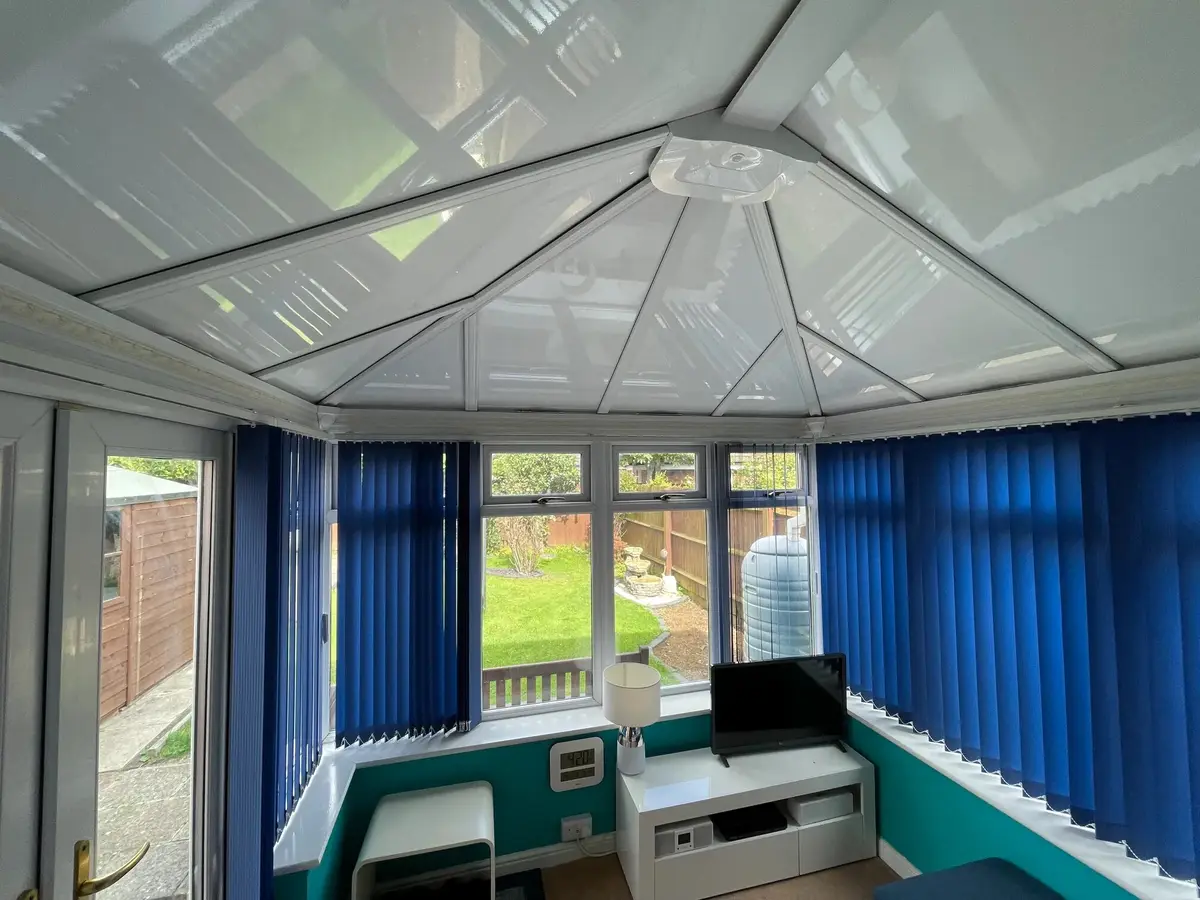
With an internal system, the polycarbonate or glass stays where it is and a new ceiling is built below it. Battens in timber or aluminium are screwed onto the roof bars, multifoil quilt or rigid board goes between and across them, and the surface is finished in plasterboard and plaster or in uPVC cladding. Many installers fit a pelmet and lights at the same time.
Expect to pay £1,000 to £3,200 for a fitted internal ceiling, and about £2,850 on average. A DIY foil kit is a few hundred pounds, though it only covers the first stage of the work.
Option two: an insulated panel roof
This route removes the old covering completely. We take off the polycarbonate sheets or sealed glass units and send them for recycling, then lay panels cut to measure onto your current roof bars. Each UK made panel has an aluminium skin on both faces and a 75 mm foam core, giving a U-value of about 0.43 W/m²K, with fitted prices from £3,000. See our insulated roof panels page for the full specification.
The two compared
| Point to weigh up | Internal ceiling | Eco Tech panel roof |
|---|---|---|
| Usual price, fitted | £1,000 to £3,200 | £3,000 upwards; most spend £3,000 to £7,500 |
| Existing roof sheet | Left on | Taken off and recycled |
| Load on the old roof bars | Old covering, plus battens, insulation and boarding | Old covering gone, panels only |
| Leaks through the old covering | Can carry on, out of sight above the ceiling | Removed along with the old sheets |
| Sound of rain | Quieter, but the outer sheet still drums | Muffled by 75 mm of foam |
| Chance of condensation | Possible in the void beneath the cold sheet | Inside skin sits near room temperature |
| Warranty from Eco Tech | We do not fit this product | HomePro 10 year insurance backed |
Where lining the roof falls short
Extra load on bars meant for something light
Bars on a polycarbonate roof were sized for polycarbonate. A lined ceiling hangs battens, insulation and board off them, and 12.5 mm plasterboard by itself comes to roughly 8 to 9 kg per m², with plaster still to add. A strong, well made frame may cope, but on an older roof whose bars already sag it can make things worse.
The faulty roof never goes away
Lining does nothing for the outside. Yellowed sheets, split seals and slipping panels keep failing above the new ceiling, now out of view. Water that once dripped onto the floor can end up soaking the insulation and plasterboard instead, which is why our article on a conservatory roof that leaks warns against covering a leak up.
Condensation may simply relocate
Moist room air always heads for the coldest surface available. Unless the vapour control layer is sealed tight around each batten, screw and light fitting, the moisture ends up on the cold underside of the old sheet, hidden inside the ceiling. The causes are set out in our guide on how to stop condensation in a conservatory roof.
Rain is muffled, not silenced
Rain and hail still land on the outer polycarbonate. The ceiling below softens the sound, but you will still hear drumming, whereas a panel's foam core quietens it where the rain actually hits.
The regulations still shift
Building regulations exempt a conservatory only while 75% or more of its roof lets light through, plus further conditions on wall glazing, floor size, the doors to the house and heating. An opaque ceiling can remove the exemption in the same way a panel roof does, so find out which regulations apply to your home before anyone starts.
When a lined ceiling is a fair choice
If the cheaper route genuinely suits you, we will say so. Internal insulation can work well when every one of these is true:
- the covering is fairly new, does not leak and is not sliding
- the bars are straight and the frame has not moved
- your budget is definitely below £3,000
Where water already gets in, the ceiling drips or sheets are creeping down, paying to insulate under it only hides a roof you will have to replace anyway.
When panels are worth the extra
An Eco Tech panel roof costs a bit more than an average internal job, though the difference is usually smaller than people assume. That extra removes the noisy, leaky outer sheet, lets the bars carry panels alone rather than an old roof and a ceiling, and leaves you with a measured U-value near 0.43. Take 12 m² of roof with 20°C indoors and 0°C outdoors: 16 mm polycarbonate lets out around 552 W, while our panels let out around 103 W.
Prices include taking the old roof away and the HomePro 10 year insurance backed warranty, and finance through Kanda can spread the cost, subject to status. Size by size figures sit on our roof panel prices page.
A word on DIY foil kits
Foil quilt kits that you staple or tape to the bars sell for a few hundred pounds. They do soften the winter chill, but they leave gaps at each bar, and foil pressed against a cold roof sheet with no sealed vapour control layer often causes condensation you cannot see. If you fit one anyway, keep it well away from cables and light fittings, and inspect it after the first frosty spell.
Questions people ask
Can lining a conservatory roof lead to condensation?
Yes, it can. Any damp air that slips past the insulation will condense on the cold underside of the old sheet, out of sight inside the ceiling. Sealing the vapour control layer completely lowers that risk.
Is insulating the roof a DIY job?
A foil kit is something you can put up yourself, but a properly built internal ceiling, or a new panel roof, needs a professional fitter.
How much weight does an internal ceiling add?
It varies with the build. Plasterboard at 12.5 mm comes to roughly 8 to 9 kg per m² on its own, before battens, insulation and plaster are added, and all of it hangs from bars that are still holding up the old roof.
How much does it cost to insulate a conservatory roof in the UK?
A fitted internal ceiling typically runs £1,000 to £3,200, averaging around £2,850. An insulated panel roof from Eco Tech starts at £3,000, and most households spend £3,000 to £7,500.