Nearly all conservatory roof leaks start at one of seven points: clogged gutters, the junction with the house wall, worn bar gaskets, split sheets, unsealed polycarbonate flutes, sheets that have slipped, or broken glass seals. One leak on a roof younger than 10 years is normally worth fixing. Several leaks on a roof older than 15 years rarely are.
Rule out condensation first
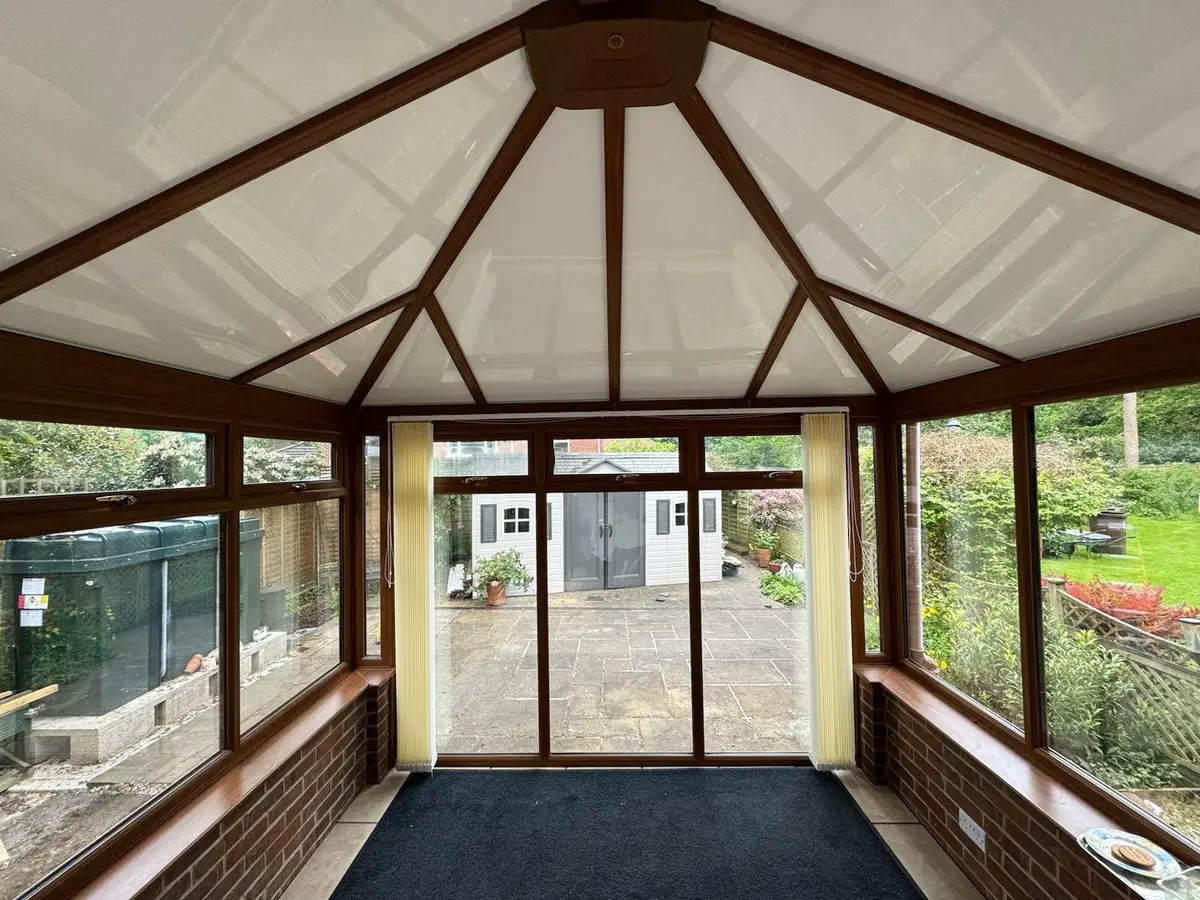
Plenty of the water people find in a conservatory is condensation rather than rain. The inner face of polycarbonate and older glass is cold, so damp room air condenses against it and trickles along the roof bars. It falls from the lowest spot it reaches, which looks just like a leak.
Telling them apart is easy. Water that shows up on a dry, cold morning following a clear night is condensation. Water that only appears in or shortly after rain, particularly when it is windy, is a leak. Some roofs suffer from both. If yours is the first kind, read our guide on how to stop condensation in a conservatory roof.
Finding the entry point
Rain seldom drips at the spot where it gets in. It runs beneath a bar or along the top of the ring beam and drops wherever is lowest, which can be a metre or further away. The steps below narrow the search, and none of them need you on the roof.
- Mark where it drips with a strip of masking tape on the inside, and jot down what the weather was doing.
- Follow the closest bar upwards in the direction of the ridge and house, looking for stains, grime lines or old water marks that show the route.
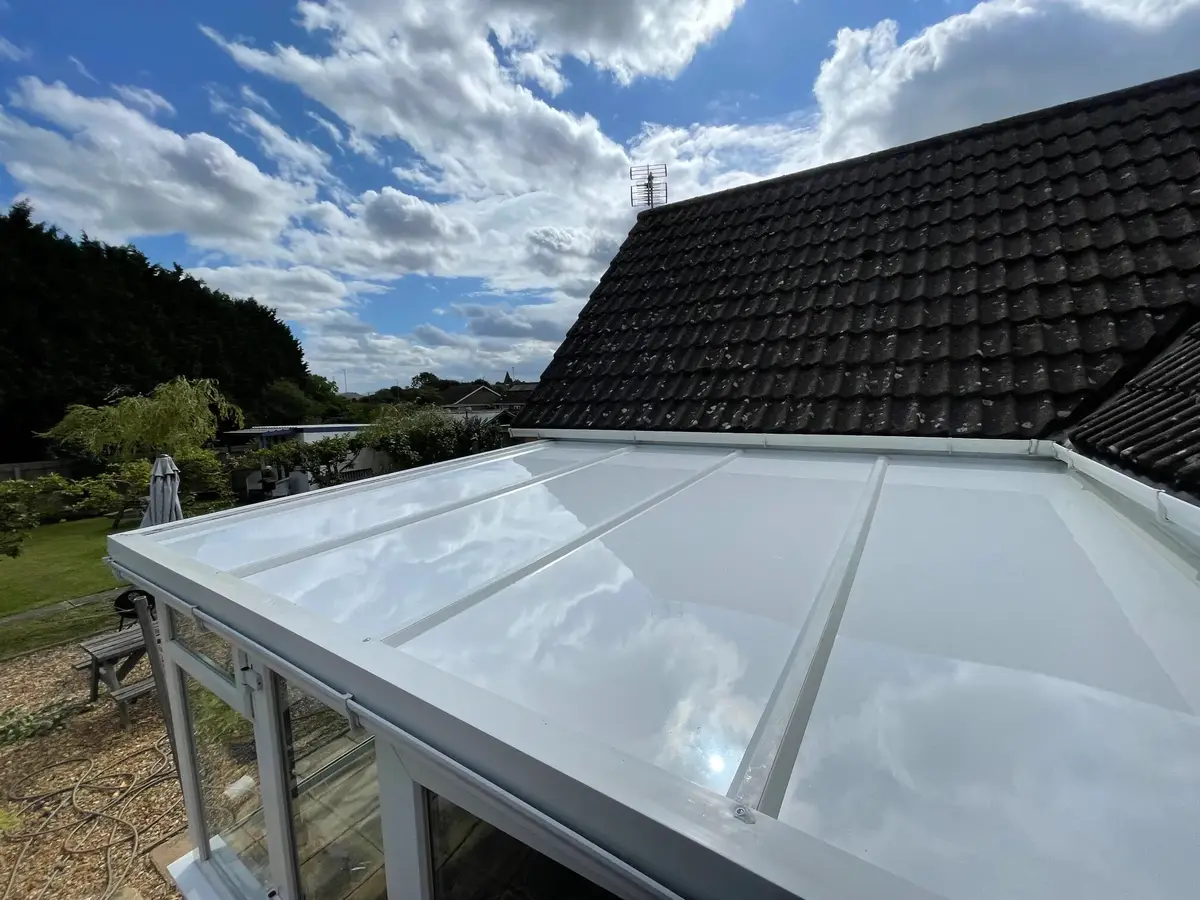
- Watch the gutters from the ground while it rains. Water spilling over the outer lip points to a blockage or a dip.
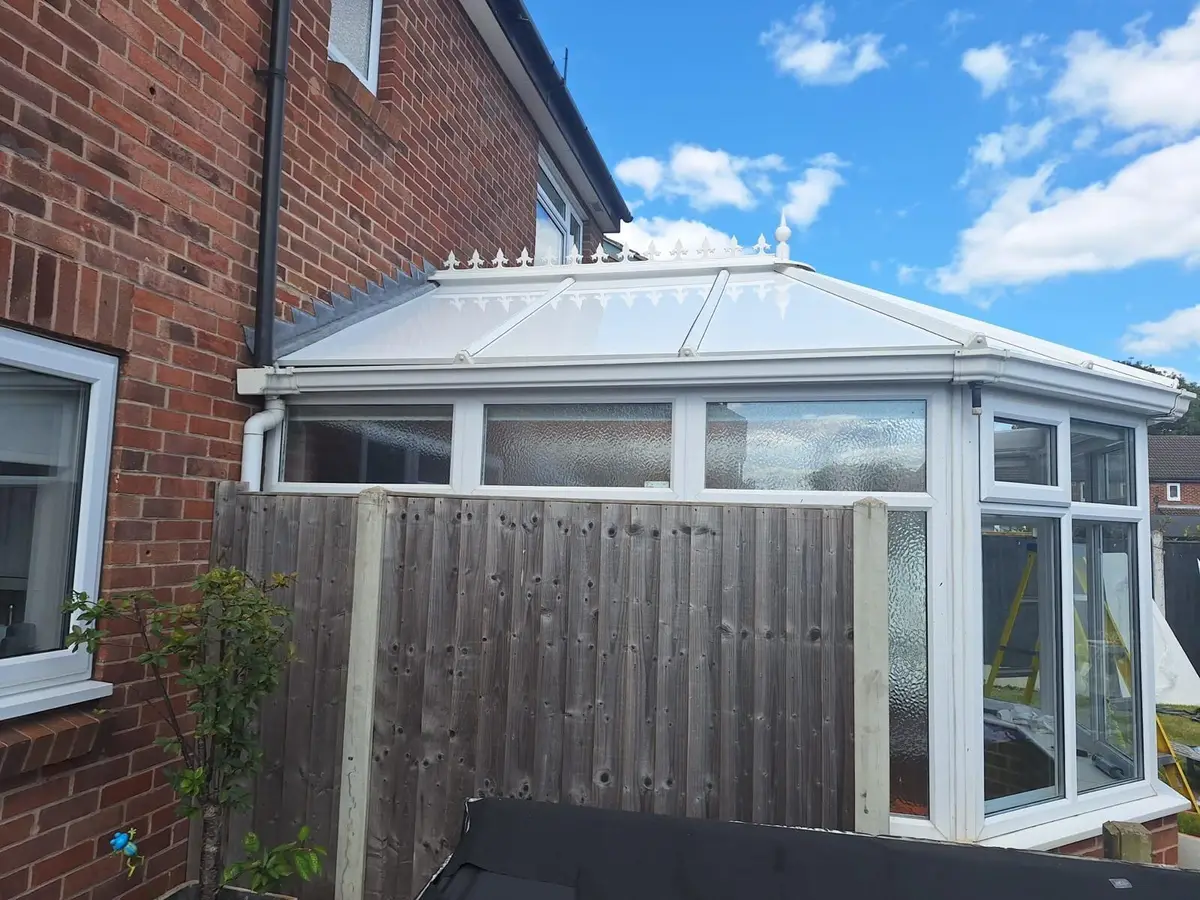
- Inspect the junction with the house. Split sealant, a gap beneath the flashing or damp marks on the inside of the house wall all suggest the leak is here.
- Use a hose gently on one part of the roof at a time, standing on a stepladder at gutter height while someone watches indoors. Begin at the bottom and move up, so you can tell which part triggered the drip.
Do not climb on the roof, and never rest a ladder on the bars or the gutter. Neither is built to carry a person, and polycarbonate or older glass can break with no warning at all.
Seven common causes
| Source | What you see | Fixable? |
|---|---|---|
| Gutter blocked or sagging | Overflow at the outer lip, drips running along the top of the frame | Yes: clear it and refix, and new gutters cost little |
| House wall junction | Drips near the back wall, damp patches on the house side | Normally, by resealing or replacing the flashing |
| Worn gaskets on the bars | Drips along a bar, often at several points | On one bar, yes; if every gasket is old, the fix seldom holds |
| Split polycarbonate sheet | A crack you can see, water inside the channels | Yes, by changing the sheet |
| Flute ends open or failed | Green or black growth inside, water appearing at the eaves | At times, by retaping; dirty flutes often stay dirty |
| Sheets that have slipped | Gap along the ridge, sheet hanging out over the gutter | Yes, by pushing it back and fixing it; older roofs often slip again |
| Broken seals on glass units | Fog between the panes, water around the edge of the unit | Yes, by changing the unit |
When repairing is sensible
Repair is the right choice when the fault is confined to one spot and everything else up there is healthy. The textbook example is a roof less than 10 years old that has one leak at a gutter or the wall junction. Clearing a gutter, resealing flashing or changing one sheet can add years of life.
It is also sensible if the room already suits you. If the conservatory already feels comfortable in every season and your only problem is rain getting in, stop the leak and save the rest of your budget.
When a new roof is the smarter spend
Replacing wins once repairs are just moving the leak around. Watch for leaks at more than one point, leaks that come back within 12 months of a repair, polycarbonate that has gone yellow or brittle, and several fogged glass units. Gaskets and seals wear out at the same pace, so fixing one usually sends the water to the next weak joint.
It makes sense too if the room is freezing in winter and stifling in summer regardless. Before paying for the roof, ask whether the same money could cure the leak and the comfort issue at once. Our guide on how long a conservatory roof lasts includes a short checklist.
Comparing the costs
Repair prices vary with the job and the access, so always ask for a written figure. For a whole new roof on a small conservatory, these are the usual numbers.
| Choice | Usual cost | U-value of roof | What does not change |
|---|---|---|---|
| Fresh polycarbonate, 3 m x 3 m | £2,000 to £3,500 | 1.6 at 25 mm, 1.4 at 35 mm | Summer heat, winter chill, noisy rain |
| Replacement glass, 3 m x 3 m | £3,300 to £5,200 | 1.0 to 1.2 with modern low-e | Direct sun in summer |
| Lining fitted beneath the old roof | £1,000 to £3,200 | Depends on the product | The old roof, leaks included, stays above |
| Eco Tech insulated panels, up to 12 m² | From £3,000 | Around 0.43 | The frame you already have |
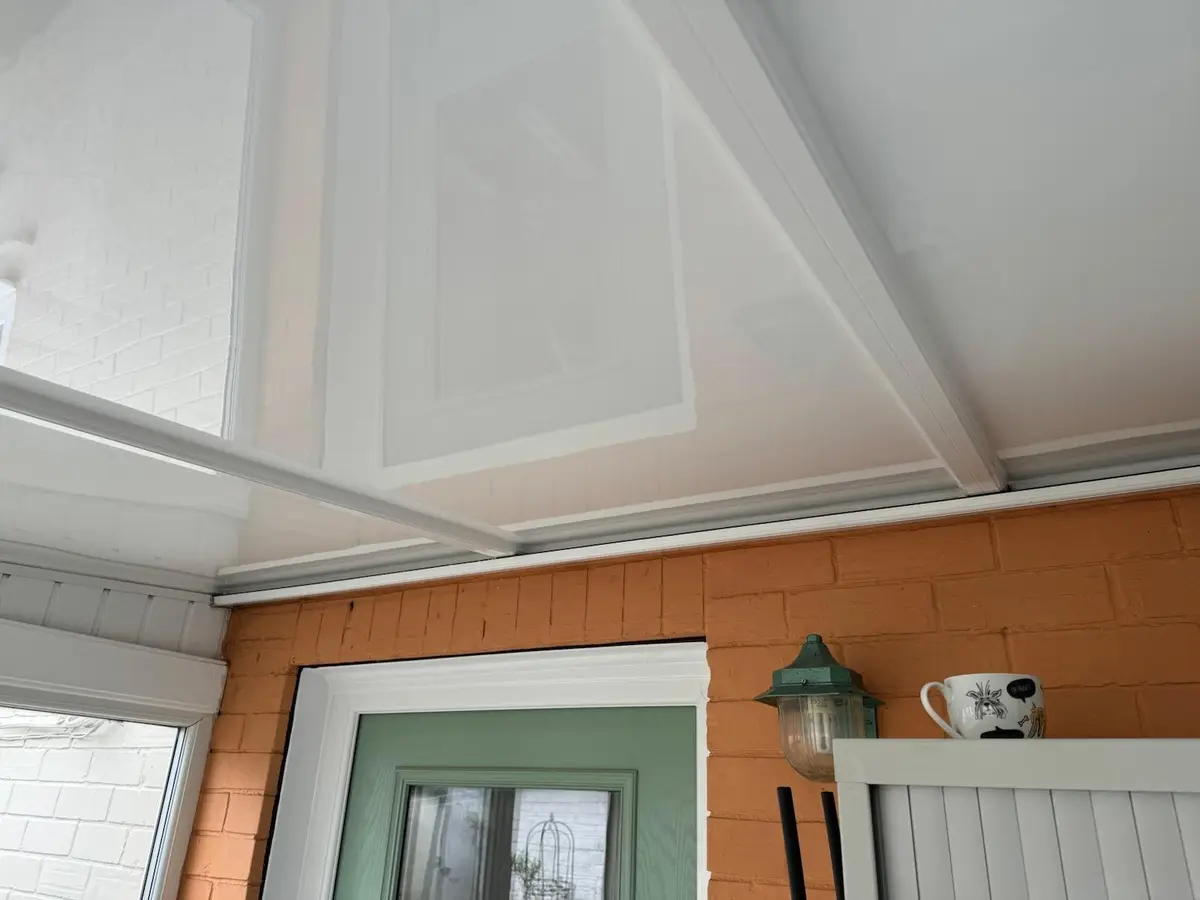
Internal lining needs a particular warning. Because it goes in under the old roof, it cannot stop a leak. Rain that gets past the old roof can saturate the lining and stain the new ceiling, and you will have no way of seeing the source. Sort out or replace a leaking roof before lining it.
Our panel prices cover removing and recycling the old roof, UK made panels cut to size in your colour, fitting and the HomePro 10 year insurance backed warranty. See every size and style on our conservatory roof panel prices page.
How a new panel roof deals with the leak
On an Eco Tech job the old sheets or glass come off along with their tired gaskets. Panels cut to your measurements go into the bars you already have with brand new seals. While we are up there, our fitters inspect the gutters and the house wall junction. New gutters and fascia, if you need them, cost £295.
A small lean-to or Edwardian normally takes a day, medium roofs a day or two, and the biggest roofs, P-shapes included, two to three days. Scaffolding is rarely needed on a single storey roof. If rain is due, we plan the day so the room is covered before we leave each evening.
Stopgaps while you decide
If rain is getting in right now, clear the gutters and make sure the downpipe is flowing, as that cures more leaks than anything else. Shift furniture and rugs out of the way and stand a tray under the drip. Do not squeeze sealant from a tube along the joints on top, since trapped water behind it makes a proper fix harder later on.
What to do now
If the leak is just one of several faults with the roof, get a guide figure from our roof price calculator, then book your free survey. Eco Tech will find where the rain is getting in and tell you honestly if a repair is enough.
Questions people ask
Why does my roof only leak when it pours?
Heavy or windblown rain overloads the gutters and forces water past tired gaskets and flashing that hold up fine in a light shower. Start by checking the gutters and the junction with the house.
Can I repair a conservatory roof leak myself?
Clearing gutters and downpipes from a ladder resting on the house wall is safe enough. Anything that involves getting onto the roof is a job for someone with proper access equipment.
Will my home insurance pay for a leaking conservatory roof?
Policies generally cover sudden damage like storms but exclude wear and tear such as perished seals. Read your policy wording and speak to your insurer before you claim.
Do insulated panels cure a leaking roof?
Yes. The old sheets and worn gaskets are removed and every panel is sealed afresh. Our fitters also inspect the gutters and the house wall junction, two of the most common places for leaks.