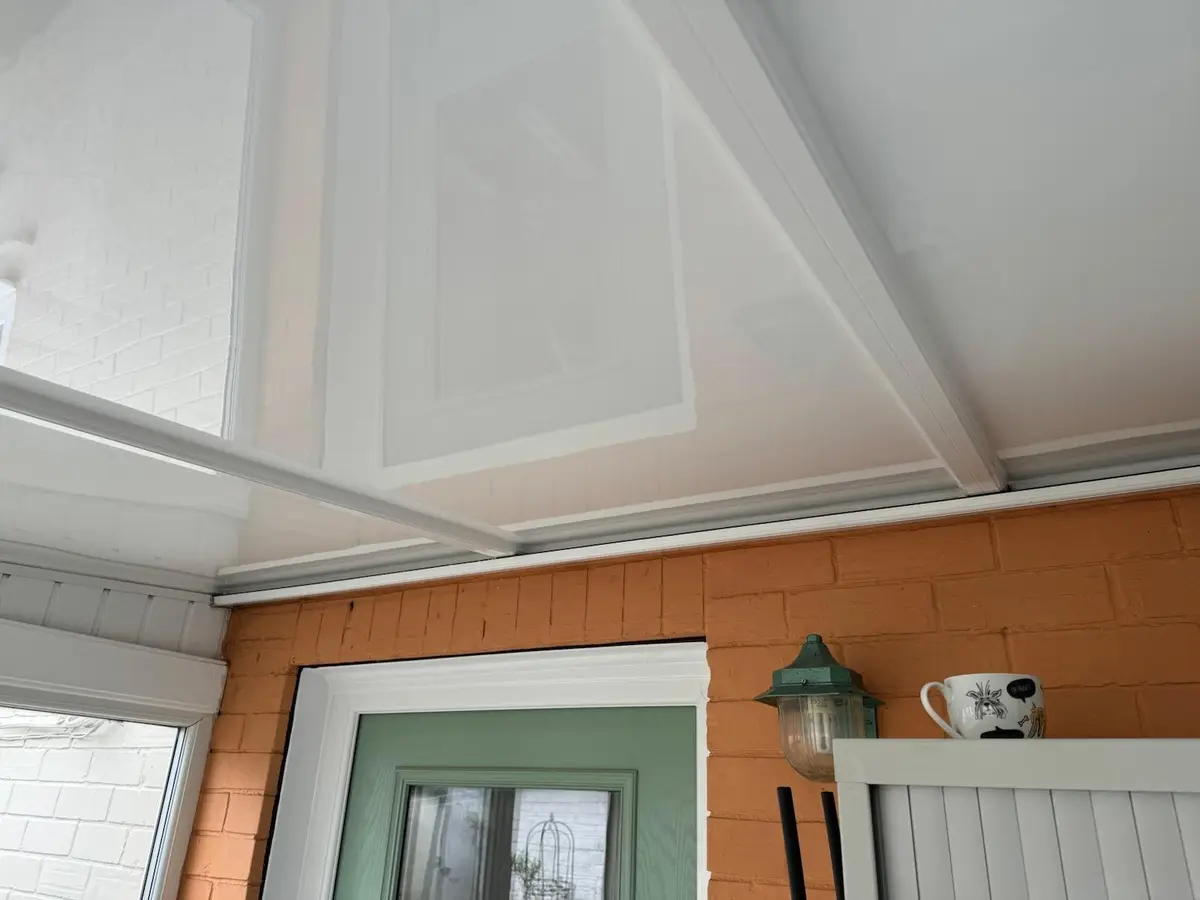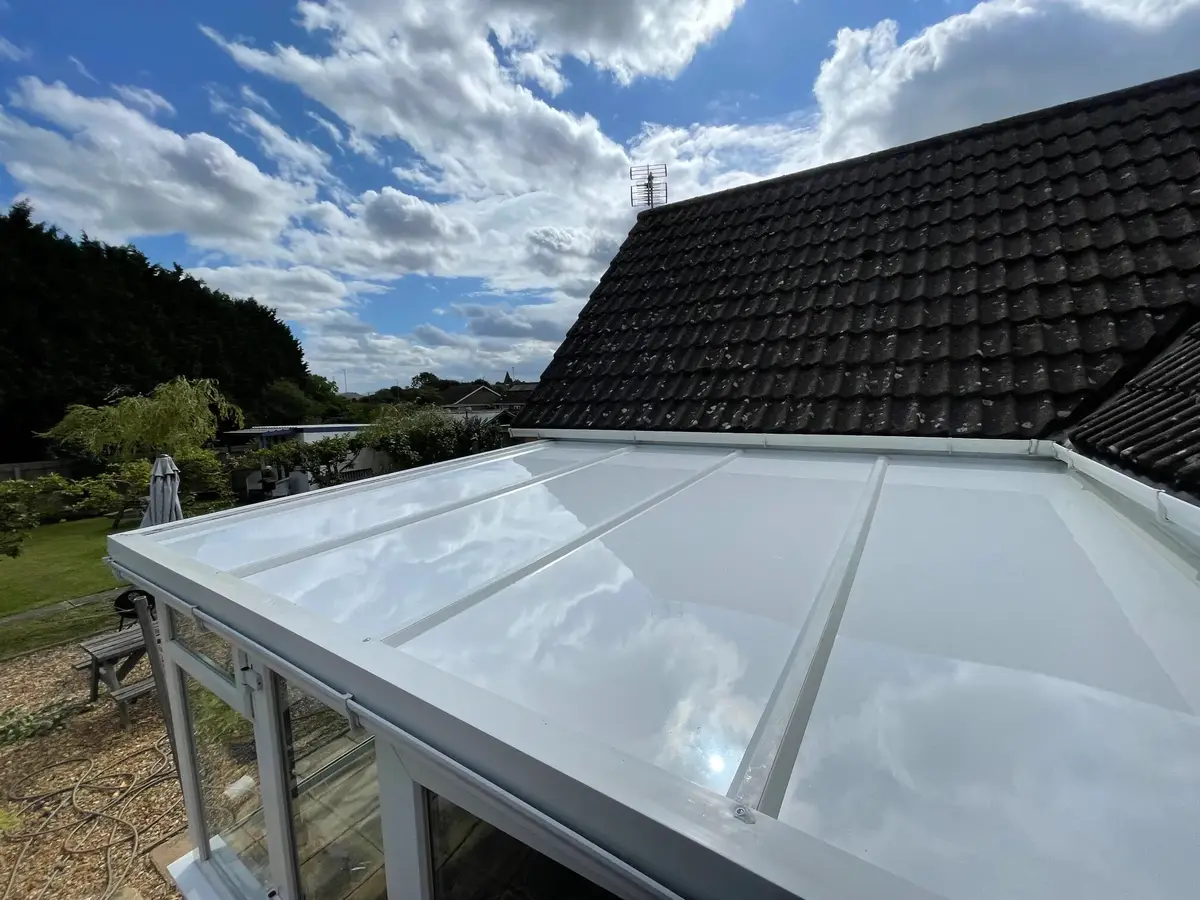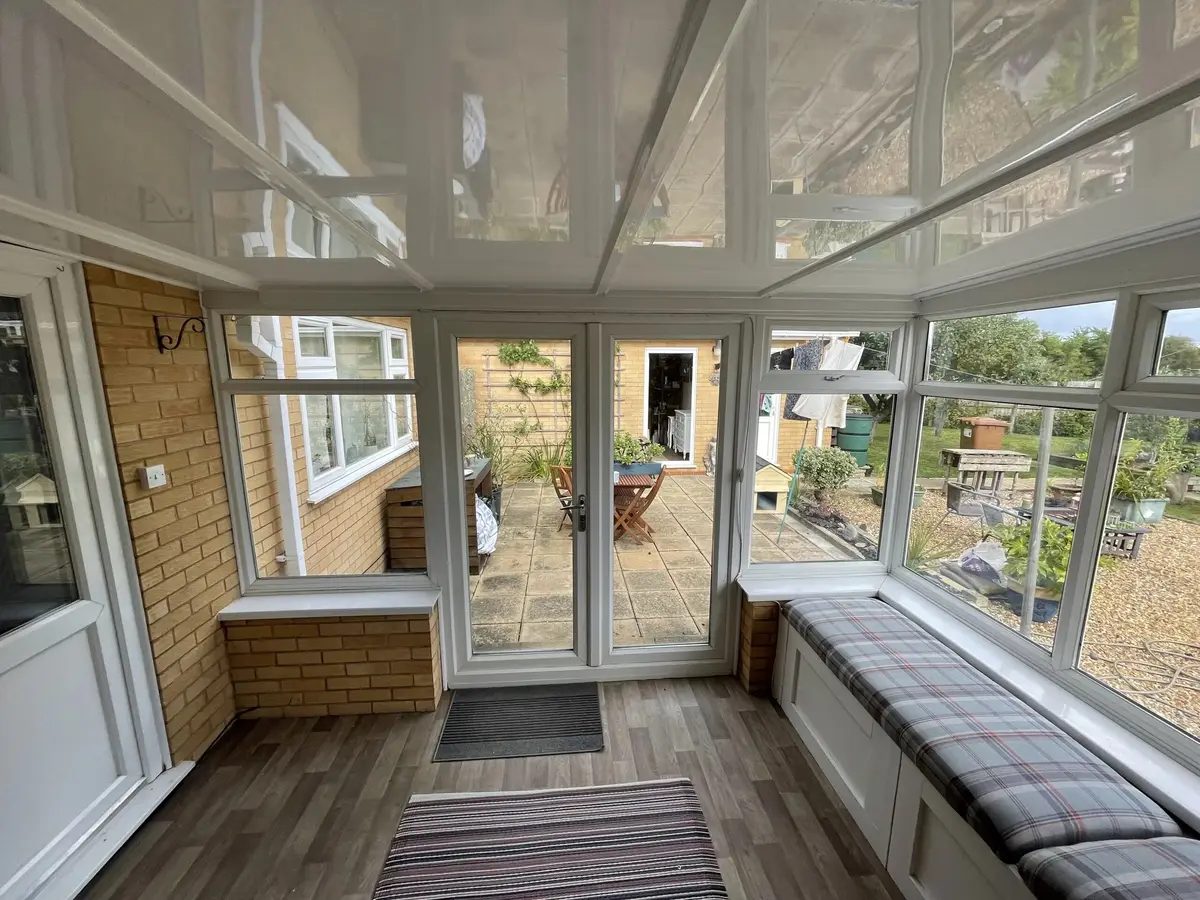
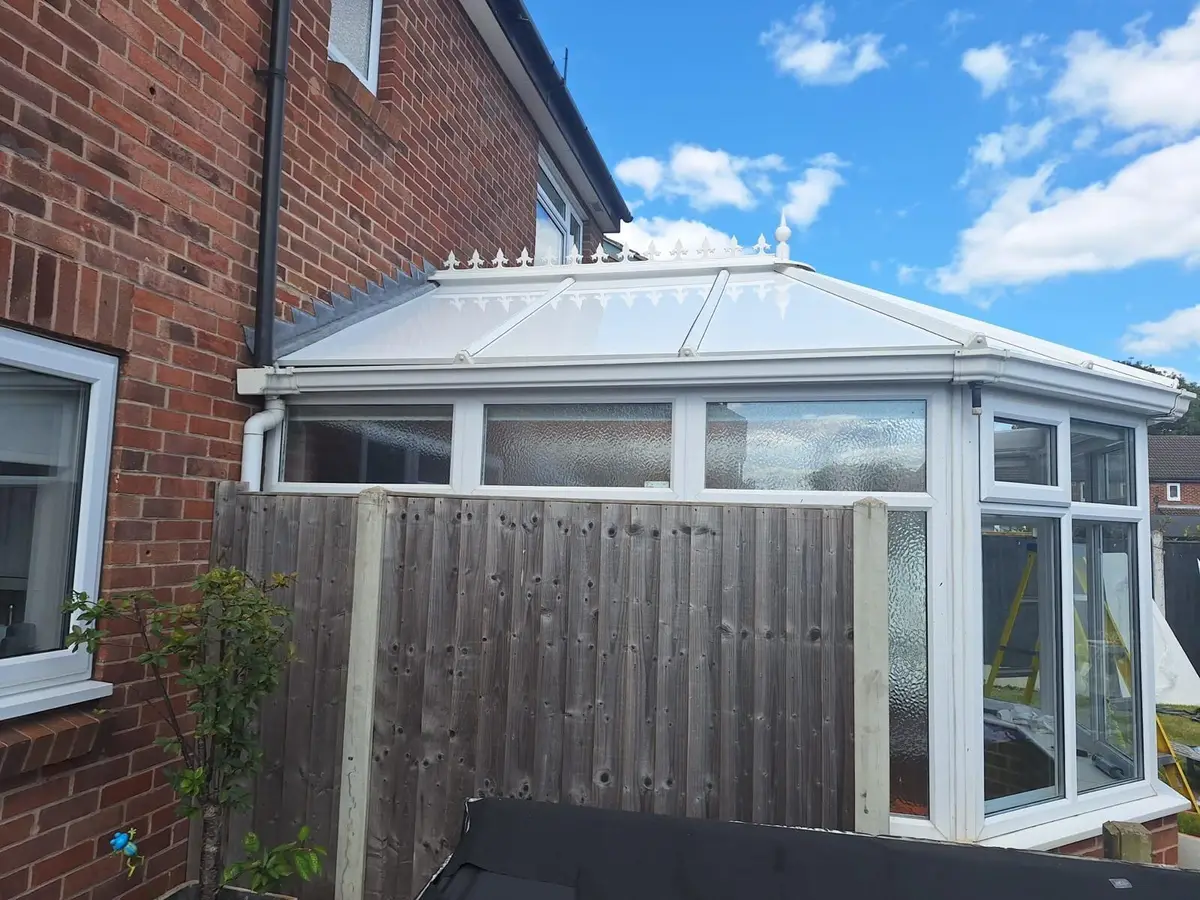
A polycarbonate conservatory roof normally gives 10 to 20 years before it discolours, goes brittle and lets water in, while sealed glass roof units tend to mist over somewhere between 15 and 25 years. If you can tick two or more of the nine signs below, such as recurring leaks, heavy condensation or a room that sits empty six months a year, replacing usually makes more sense than repairing again.
Typical lifespans
Conservatories put up through the 1990s and 2000s mostly have polycarbonate roofs, often 16 mm or 25 mm deep. UV light gradually degrades the plastic, so it goes hazy first, yellow next and finally brittle. For most homes that process runs 10 to 20 years, and roofs facing south age quickest.
Glass itself lasts longer, but every sealed unit depends on the seal around its edge. Once that seal gives way, moisture creeps between the two panes and the unit fogs from within, usually after 15 to 25 years. Glass roofs fitted before 2002 also insulate badly, at a U-value of about 2.8.
A roof's age on its own does not mean it needs replacing. The nine signs below say far more about whether yours is close to the end.
Nine signs to look for
1. Polycarbonate that is yellow, hazy or brittle
Discoloured sheets have begun to break down. Brittle ones split when a branch or hailstone strikes, and a split sheet lets rain into its channels. No amount of cleaning will reverse the yellowing.
2. Green or black growth in the channels
Polycarbonate is made up of hollow flutes. Once the tape or end caps along the lower edge fail, dirt and water get inside and algae grows where nobody can reach it. That tells you the seals have gone, so cleaning will not solve it.
3. Leaks that keep returning
One leak at a single joint is often quick to fix. Leaks that reappear, or wander from place to place, generally mean the gaskets and seals along every bar have worn out at the same rate. Our conservatory roof leaking guide shows how to trace where the water comes from.
4. Drips from condensation on chilly mornings
The inside face of polycarbonate and older glass is cold, so moist room air condenses there and drips back down. A little on one frosty night is nothing to worry about. Water trickling down the walls on most mornings between October and March tells you the roof is losing plenty of heat.
5. Fogged glass units
Mist or droplets trapped between the panes of a glass unit mean its seal has broken. One unit can be swapped by itself, but when several fail together, the rest are rarely far behind.
6. Sheets sliding down to the gutter
When polycarbonate sheets slip, they open a gap at the ridge that lets rain through. They can be shoved back up and secured, though on older roofs with loose caps and fixings the slipping tends to return.
7. Baking in July, freezing in January
With direct sun pouring through the roof, conservatories regularly reach 35 to 40°C in summer. In winter that same roof lets the warmth straight out. If the door stays shut for over six months of every year, blame the roof first.
8. Rain drowning out the TV
Thin polycarbonate drums loudly in a heavy shower. It is not a sign of failure, yet it is one of the commonest reasons homeowners swap out a roof in otherwise fair shape.
9. Dipping bars or a dropped box gutter
Bars that sag at mid span, or a box gutter coming away from the house, suggest a structural problem. That must be checked before any replacement roof is fitted. Read is my conservatory frame strong enough for what to look out for.
Repair or replace: a quick guide
| What you notice | Probable cause | Normally the better option |
|---|---|---|
| Single leak at one joint on a roof less than 10 years old | Worn gasket or blocked gutter | Repair it |
| A misted unit or two in a glass roof | Broken edge seals | Swap just those units |
| Polycarbonate gone yellow or brittle | UV damage to the sheets | New roof |
| Several leaks, or leaks that come back | Seals worn out across the roof | New roof |
| Bad condensation on most winter mornings | Cold inner surface, heavy heat loss | New insulated roof |
| Room left empty in both summer and winter | Heat passes in and out too freely | New insulated roof |
| Bars sagging or base cracked | Structure on the move | Have the structure checked before anything else |
Replacing like for like
Putting polycarbonate back is an option, at roughly £2,000 to £3,500 for a roof of 3 m by 3 m. The new sheets will look clear, yet 25 mm polycarbonate still sits at a U-value near 1.6. Winters in the room stay chilly and summers stay stuffy, and you will probably be facing the same choice in another 10 to 20 years.
Modern low-e glass runs to about £350 to £550 per m², which is £3,300 to £5,200 on a roof measuring 3 m by 3 m. At 1.0 to 1.2 it is a big step up from old units, though it still lets the summer sun straight in.
The difference an insulated panel roof makes
Eco Tech panels are made in the UK around a 75 mm foam core, giving a U-value near 0.43. Compared with 16 mm polycarbonate at 2.3, roughly 80% less heat escapes through the roof. Take a 12 m² roof with the room at 20°C and 0°C outside: 16 mm polycarbonate loses around 552 W, while our panels lose around 103 W.
The ceiling side of a panel stays near room temperature, so condensation mostly stops. The solid roof keeps direct sun off in summer, and the foam deadens the sound of rain. If you are worried about losing light, glazed roof lights can be built into the panel roof, and most customers go for one or two. Our polycarbonate conservatory roof replacement page explains how the change is made.
The downsides, plainly
Expect to pay more for panels than for new polycarbonate. Small roofs start at £3,000 and most customers pay £3,000 to £7,500, compared with £2,000 to £3,500 for fresh sheets on a small roof. The room will also be less bright than under clear sheets, which roof lights and LED spotlights improve without fully matching.
Try this: on a cold evening, leave an inexpensive thermometer in the conservatory and another in the room next door. With the heating on, a difference above 8 to 10°C means heat is leaving through the roof faster than you can replace it.
When to do something about it
With just one sign, watch it and deal with it cheaply. With three or more, particularly discoloured sheets alongside leaks and condensation, the roof is close to the end of its working life. As we usually fit 3 to 5 weeks after the survey, it is worth booking ahead of the cold season rather than waiting for the first big storm.
Your next move
Use our roof price calculator for a guide range in a minute, then arrange a free survey. Eco Tech will look over the roof, frame and gutters and give you an honest view on whether a repair would see you through for now.
Questions people ask
What is the lifespan of a polycarbonate conservatory roof?
Typically 10 to 20 years. Roofs facing south usually go yellow and brittle first, as they take the most sunlight.
Is it possible to change only a few polycarbonate sheets?
Yes, sheets can be replaced one at a time. On an ageing roof, though, the new ones will look clearer than their neighbours, and the seals on the old sheets are usually just as worn.
Does bad condensation mean my roof is failing?
Not necessarily, but it does show the inner surface is cold and a lot of heat is escaping. With an insulated panel roof the ceiling stays close to room temperature, so condensation mostly stops.
When is the best time of year for a new conservatory roof?
Any dry period suits, and Eco Tech fits all year round. Booking in late summer gets the new roof on before the heating goes on, with fitting usually 3 to 5 weeks after survey.