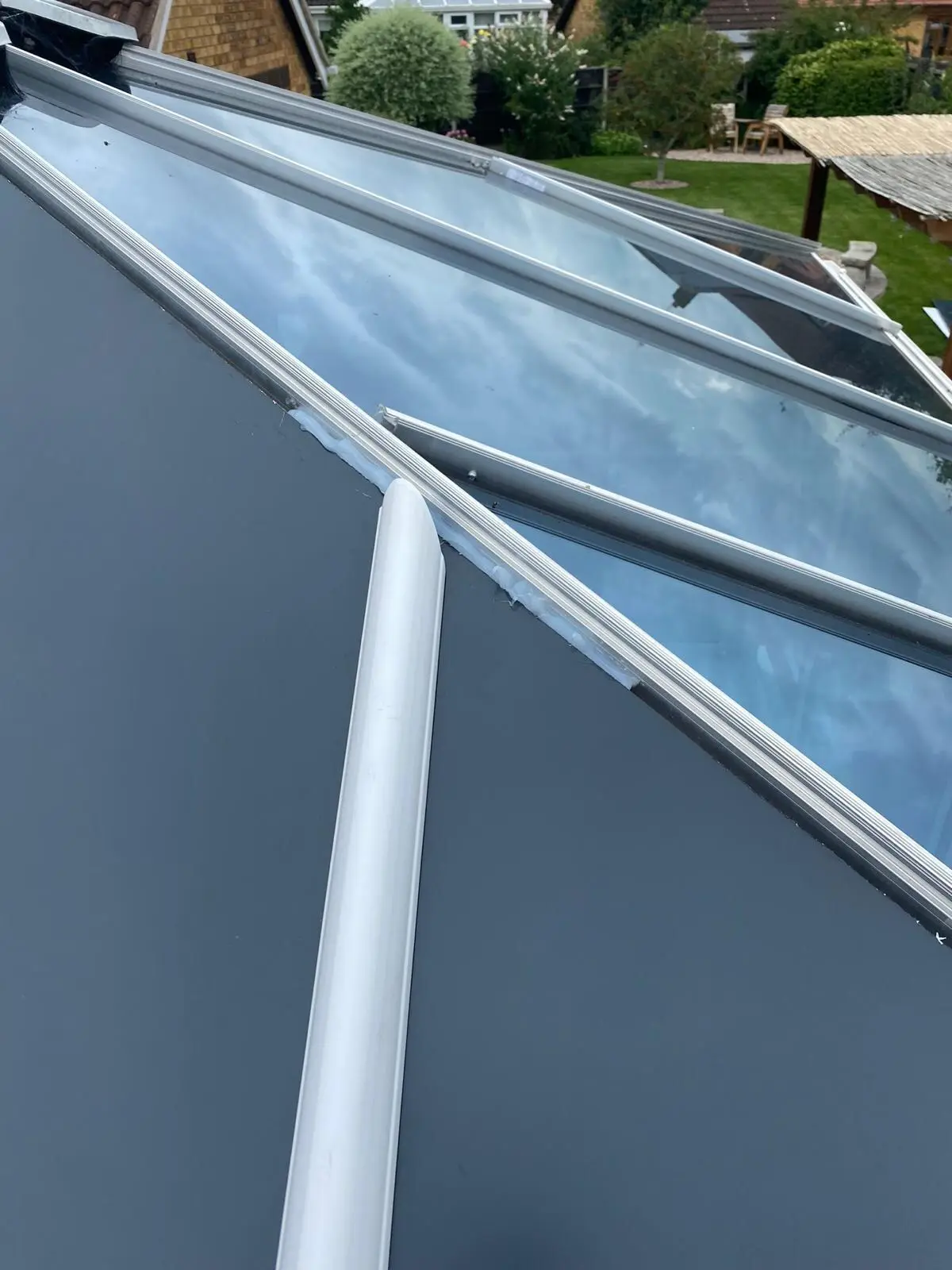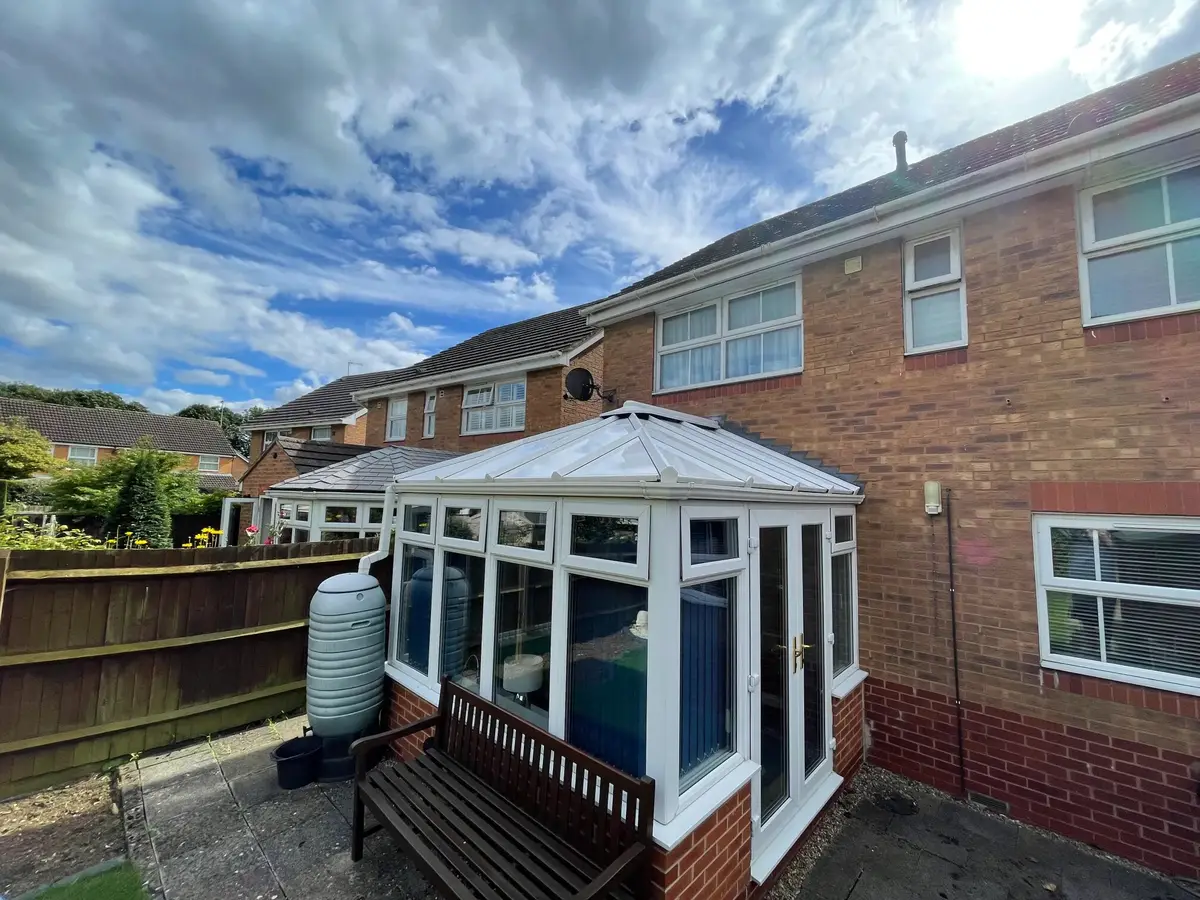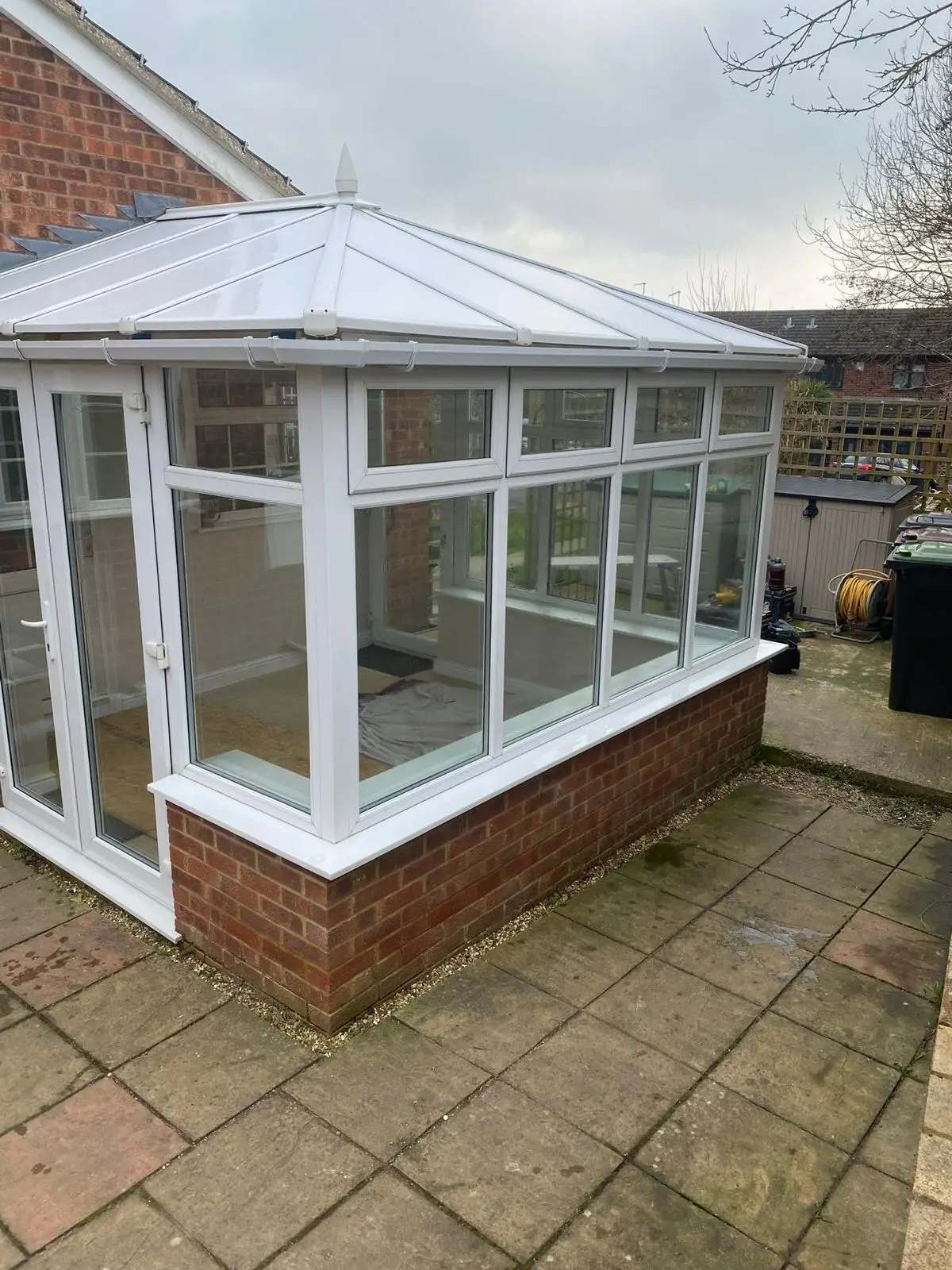
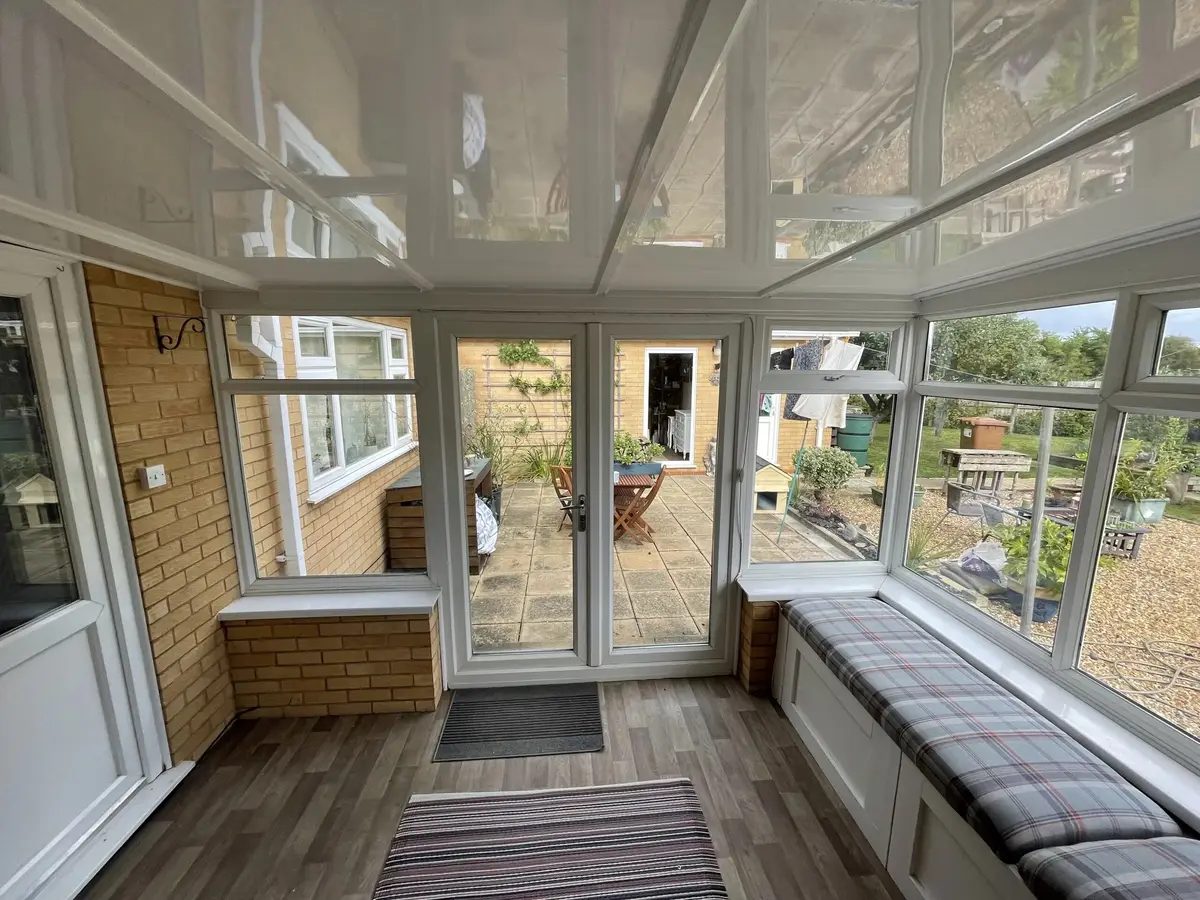
Polycarbonate is cheaper and brighter. Insulated panels are warmer, cooler in summer, quieter and largely free of condensation. Our 75 mm panel comes in at roughly 0.43 W/m²K, while 16 mm polycarbonate is 2.3, so on a frosty night a 12 m² roof leaks 103 W rather than 552 W. Fresh sheets for a 9 m² (3 m square) roof cost £2,000 to £3,500; our panels begin at £3,000.
Most people who ring Eco Tech about a tired polycarbonate roof have two routes in mind. One is fresh sheets in the same frame. The other is a switch to insulated panels. Both keep the existing frame, yet they produce two very different rooms, so below we set them against each other point by point.
Side by side
| What you are weighing up | Fresh polycarbonate sheets, 16 to 35 mm | Our 75 mm insulated panels |
|---|---|---|
| U-value in W/m²K | 16 mm: 2.3; 25 mm: 1.6; 35 mm: 1.4 | Roughly 0.43 |
| Watts lost by a 12 m² roof (20°C inside, 0°C outside) | 16 mm: 552; 25 mm: 384; 35 mm: 336 | 103 |
| Cost | A 3 m square roof: £2,000 to £3,500 | Small roofs to 12 m² from £3,000; 12 to 25 m² from £4,000 |
| Light | Bright and diffused | Solid, with glazed roof lights to bring light back |
| Hot weather | Sun comes straight through; 35 to 40°C is common | Roof shades the room from direct sun |
| Winter drips | Frequent on cold mornings | Mostly gone |
| Rain | Noisy drumming | Muffled by the foam |
| Time on site | About the same as panels | A day for small roofs, 2 to 3 days for large |
| Appearance | Clear, opal or bronze sheet | Any RAL shade outside, white inside |
Light: the one area polycarbonate leads
We will be straight about this. Polycarbonate lets plenty of soft light down through the roof, and panels let none. Expect a dimmer room, most of all at the back by the house wall. The glazed sides still bring in a lot of daylight, and most of our customers add one or two glazed roof lights for light from above. If this worries you, our guide on how much darker a solid roof makes a conservatory runs the figures.
There is an upside. Glare disappears, so a TV or laptop is readable at noon, and sofas and rugs fade far more slowly.
Heat loss in plain figures
A U-value is the number of watts that escape through one square metre for each degree of difference between indoors and out. Smaller is warmer. Swapping 16 mm polycarbonate for our 75 mm panel cuts heat lost through the roof by around 80%. Swapping 25 mm polycarbonate cuts it by around 73%.
Thicker sheet is a smaller step than most people assume. Moving from 16 mm up to 35 mm takes the U-value from 2.3 down to 1.4, a 39% drop. Even then, the roof still lets out over three times the heat a panel roof would.
| Roof over 12 m² | kWh a year | Watts at a 20°C gap | Yearly cost at 26.32p per kWh |
|---|---|---|---|
| Polycarbonate, 16 mm | 1,424 | 552 W | £375 |
| Polycarbonate, 25 mm | 991 | 384 W | £261 |
| Polycarbonate, 35 mm | 867 | 336 W | £228 |
| Insulated panels, 75 mm | 266 | 103 W | £70 |
To get the yearly kWh we multiply the U-value by the area, by 2,150 heating degree days (the England average) and by 24, then divide by 1,000. That assumes the room is kept warm all winter. The electricity rate is the Ofgem cap running from 1 October until 31 December 2026.
Running the numbers over ten years
Polycarbonate looks cheaper on day one, so we like to show what happens over a decade. Picture a 12 m² roof over a room warmed by an electric heater every winter, which Eco Tech customers often describe to us.
- Fresh 25 mm polycarbonate: about £2,750 fitted, then £261 a year lost through the roof. Ten years: £2,750 + £2,610 = £5,360.
- Our 75 mm panels: from £3,000 fitted, then £70 a year. Ten years: £3,000 + £700 = £3,700.
Heat the room less often and the gap narrows; heat it with gas and it narrows more. It only flips if the room sits unused through the winter. Even with a £395 roof light added, the panel roof stays in front on these sums.
Hot afternoons
Opal and bronze sheets take the edge off glare, but solar heat still gets in, and the warm sheet radiates more heat down onto you. That explains why polycarbonate rooms so often climb past 35 to 40°C. A solid insulated roof stops direct sun on the roof altogether, and 75 mm of foam keeps the hot outer skin from warming the ceiling. Our guide to cooling a conservatory in summer has more.
Drips and drumming
In winter the underside of a polycarbonate roof is cold. With 20°C inside and 0°C outside, the inner face of a 16 mm sheet sits near 15°C, and air at 75% humidity will form droplets on it and fall. A 75 mm panel's inner skin stays near 19°C, so the dripping mostly stops.
Rain is the everyday difference people mention to us most. Hollow sheet booms in a downpour or a hailstorm. The foam inside a panel soaks that up, and a shower becomes a quiet patter instead of a reason to reach for the remote.
Appearance and care
Sunlight slowly breaks down the surface of polycarbonate, so it yellows and goes brittle, and grime gathers in the flutes at each sheet end. Our panels have a powder coated aluminium face in any RAL shade, with anthracite grey and white the two favourites, and they are made in the UK. Keep the gutters clear, give the roof a wipe now and then, and that is the upkeep. Browse the conservatory roof colours page for shades.
Our honest recommendation
Polycarbonate makes sense when
- The room gets most use in spring and autumn and light matters most to you.
- It faces north or sits in heavy shade, so overheating is rare.
- You have under £3,000 to spend and simply need the leaks to end.
Panels make sense when
- You want a room that works in every month.
- It cooks in summer, drips in winter or roars in the rain.
- You pay to heat it for several months and would like that heat to stay put.
Where to go next
Read about our polycarbonate roof replacement service, get a figure from the roof price calculator, or request a free quote. Send us photos and measurements first, and our surveyor follows up with a fixed written price. Eco Tech fits most panel roofs in a single day.
Questions people ask
Does 35 mm polycarbonate match an insulated panel?
Not even close. At about 1.4 W/m²K, a 35 mm sheet lets out over three times the heat of our 75 mm panel at roughly 0.43.
Could I mix polycarbonate strips with panels?
We use glazed roof lights set into the panel roof rather than polycarbonate strips. One or two is the usual choice for keeping daylight.
Which roof is quieter when it rains?
Panels, and the gap is large. Hollow polycarbonate amplifies rain, while the foam core muffles the sound.